


April 2, 2026
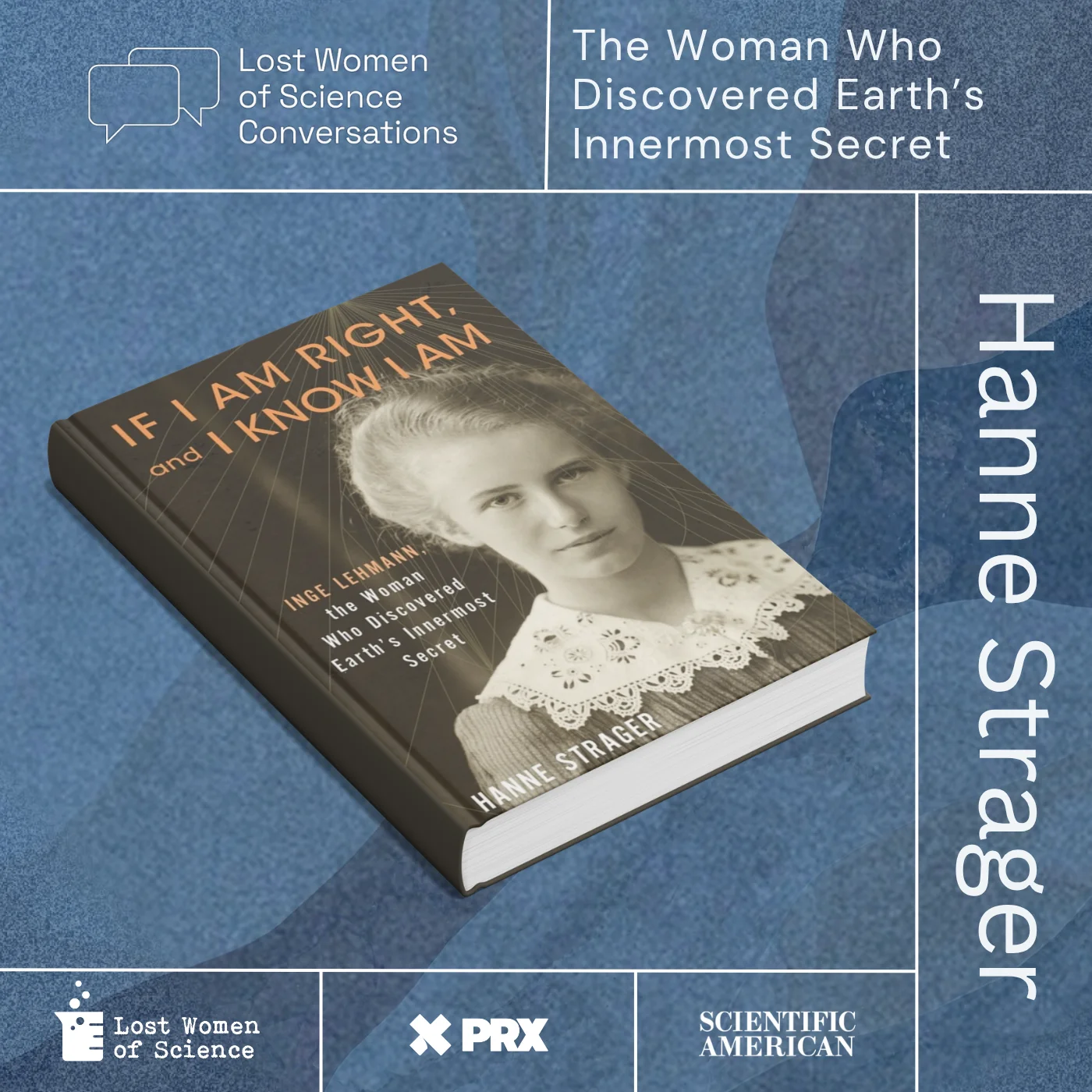
Conversations: If I Am Right, and I Know I Am: Inge Lehmann, the Woman Who Discovered Earth’s Innermost Secret


April 2, 2026
Conversations: If I Am Right, and I Know I Am: Inge Lehmann, the Woman Who Discovered Earth’s Innermost Secret
Hanne Strager explores how the trailblazing Danish seismologist Inge Lehmann overcame self-doubt to discover that Earth has a solid inner core, overturning the long-held belief that it was liquid.
Episode Description
In this episode of Lost Women of Science Conversations, host Carol Sutton Lewis speaks with science writer Hanne Strager about her biography of Inge Lehmann, the pioneering Danish seismologist who discovered that Earth has a solid inner core.
Largely unknown outside scientific circles, Lehmann fundamentally transformed our understanding of what lies at the heart of our planet. She did this in 1936 by identifying anomalies in earthquake waves that others had overlooked. At the time, scientists believed Earth’s core was entirely liquid. Lehmann proposed instead that a solid inner core lay hidden within it — a groundbreaking insight that reshaped geophysics.
In revisiting Lehmann’s story, Strager highlights that Lehmann’s legacy is one of resilience and perseverance — proof that early setbacks do not define a life, and that brilliance can flourish, even later in life.


Carol Sutton Lewis is a co-host of Lost Women of Science and co-presented our third season about Yvonne Y. Clark, “The First Lady of Engineering.” She also hosts and produces the award-winning podcast Ground Control Parenting with Carol Sutton Lewis.
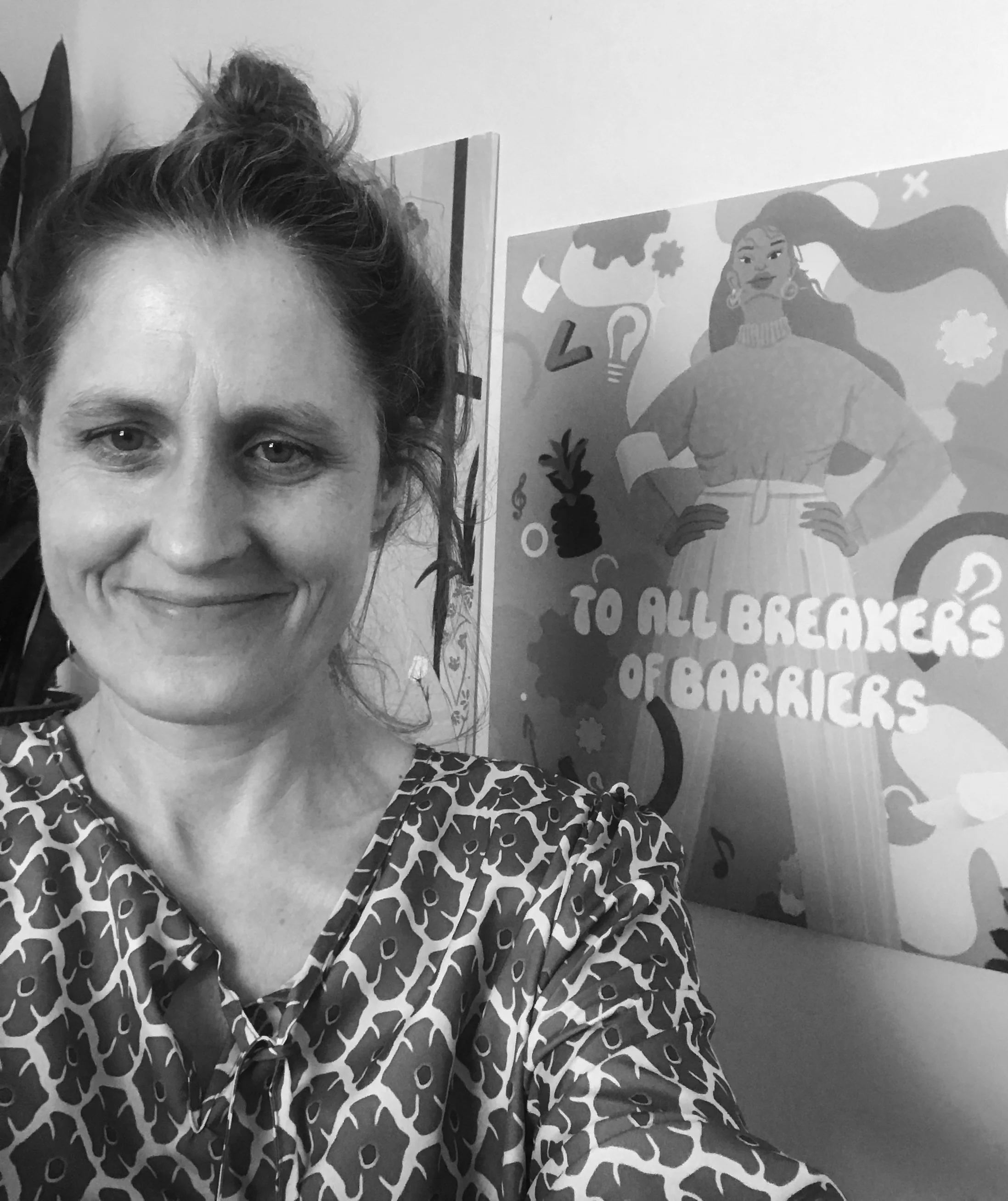
Jenny Dare is an award-winning producer whose career spans live events, podcasts, journalism and campaigns. She has held senior roles at BBC, Al Jazeera English, and UNESCO, and led campaigns in Brussels for Save the Children Europe, as well as global initiatives with Project Everyone. Her first love was radio - and she has recently produced podcasts for Lost Women of Science, BBC Radio 4 and Outrage + Optimism, and is currently Senior Producer for Truth Tellers: Sir Harry Evans Investigative Journalism Summit. She lives in London.
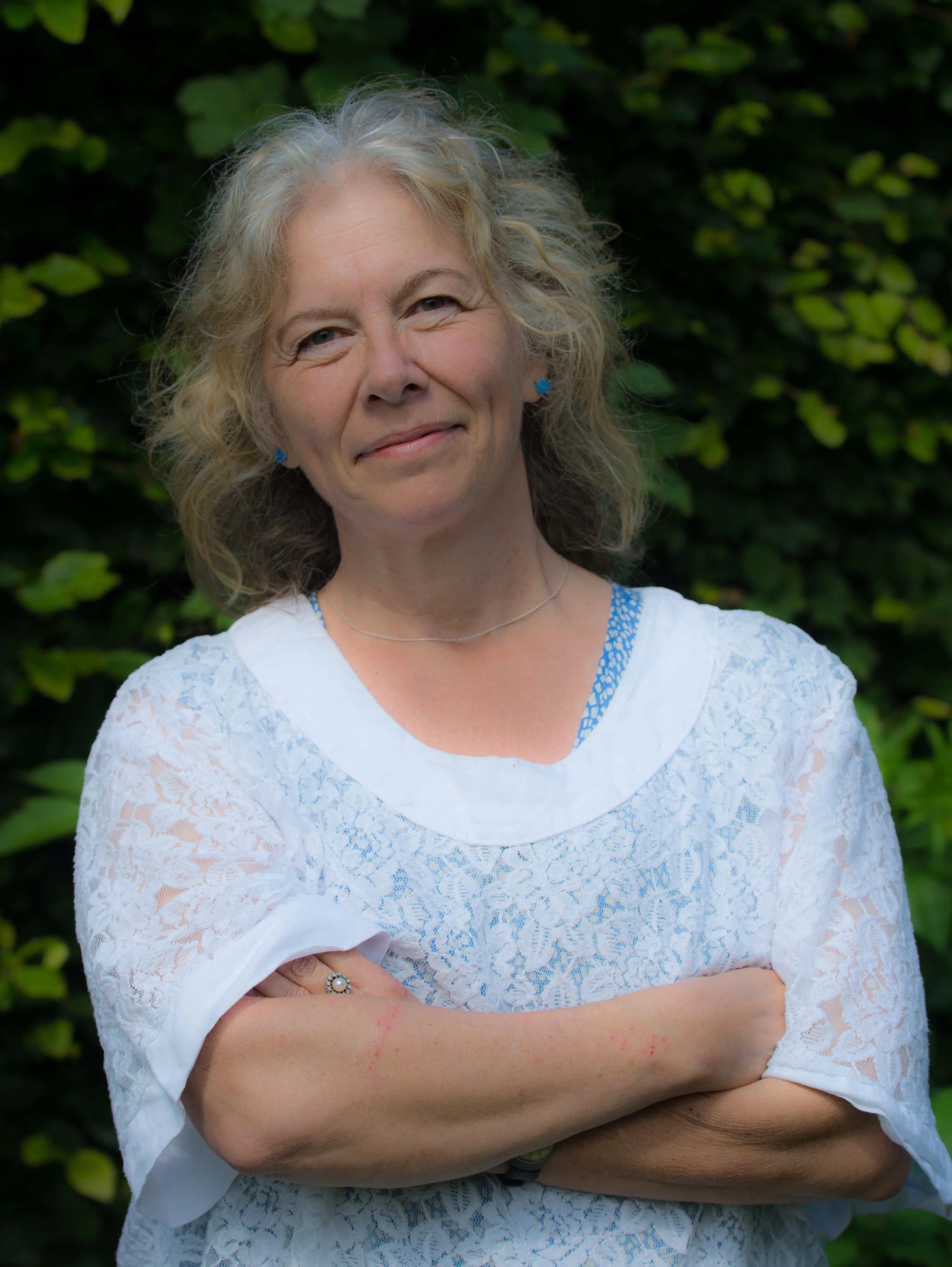
Hanne Strager is a biologist and acclaimed science writer. Her books include the Killer Whale Journals: Our Love and Fear of Orcas (2023), which received a National Outdoor Book Award. She is the Director of Exhibitions at The Whale in Norway and was formerly the Director of Exhibitions at the Natural History Museum of Denmark.
Carol Sutton Lewis is a co-host of Lost Women of Science and co-presented our third season about Yvonne Y. Clark, “The First Lady of Engineering.” She also hosts and produces the award-winning podcast Ground Control Parenting with Carol Sutton Lewis.
Jenny Dare is an award-winning producer whose career spans live events, podcasts, journalism and campaigns. She has held senior roles at BBC, Al Jazeera English, and UNESCO, and led campaigns in Brussels for Save the Children Europe, as well as global initiatives with Project Everyone. Her first love was radio - and she has recently produced podcasts for Lost Women of Science, BBC Radio 4 and Outrage + Optimism, and is currently Senior Producer for Truth Tellers: Sir Harry Evans Investigative Journalism Summit. She lives in London.
Hanne Strager is a biologist and acclaimed science writer. Her books include the Killer Whale Journals: Our Love and Fear of Orcas (2023), which received a National Outdoor Book Award. She is the Director of Exhibitions at The Whale in Norway and was formerly the Director of Exhibitions at the Natural History Museum of Denmark.


Further Reading:
If I Am Right, and I Know I Am, Inge Lehmann, the Woman Who Discovered the Earth’s Innermost Secret by Hanne Strager, published September 2025 by Columbia University Press
Inge Lehmann’s paper: ‘P’, first published in 1936, published here as a Classic Paper in the History of Geology by Harvard University
Seismology in the Days of Old, by Inge Lehmann, published in EOS, Transactions American Geophysical Union: Volume 68, Issue 3
The Inge Lehmann Programme at the Independent Research Fund Denmark
Overlooked No More: Inge Lehmann, Who Discovered the Earth’s Inner Core by Dylan Loeb McClain for the New York Times, published December 20, 2025
Episode Transcript
Conversations: If I am right, and I know I am: Inge Lehmann, the Woman Who Discovered Earth’s Innermost Secret
Hanne Strager: I think her legacy is resilience and perseverance. How much it matters that you carry on, even despite having a huge mental, nervous breakdown in your youth, you can still rise. There's still a whole life in front of you.
Carol Sutton Lewis: Hello and welcome to Lost Women of Science: Conversations. I'm Carol Sutton Lewis. In this series of conversations, we talk to authors and artists who've discovered and celebrated female scientists in books, poetry, film and the visual arts.
I'm delighted to be joined today by the brilliant science writer Hanne Strager, who's written award winning books on subjects including killer whales and Darwin. Hanne has recently turned her focus to Inge Lehmann, a little known Danish scientist. Hanne's biography is called, If I'm Right and I Know I Am. Inge Lehmann, the woman who discovered Earth's innermost secret. The book gives us fresh and fascinating insight into a woman whose study of the waves from earthquakes led to a new understanding of what lies at the very center of our planet.
Hanne, thanks so much for joining us.
Hanne Strager: Thank you so much for having me!
Carol Sutton Lewis: So you're a widely acclaimed biologist, you're an author, a museum director. You could have chosen anyone to make the next subject of a research project. Tell us what attracted you to Inge Lehmann, her life, and her story.
Hanne Strager: I think that what attracted me was that I didn't know her. I met geologists at my work at the Natural History Museum in Denmark, who said that, “well, you know, she's probably the most famous geologist from Denmark. She's amazing!” And I was like, “I've never even heard of her, not in school, not at university. I never heard of her,” and neither did anyone else. And that's what was the intriguing part. How could we have someone so interesting and who had contributed so much, and then why didn't we know of her?
Carol Sutton Lewis: And so how did you go about researching her, since she wasn't so well-known?
Hanne Strager: Well, the first thing I did was that I went to the National Archives of Denmark and ordered all her correspondence. I'm not a historian or not used to working in archives, so I didn't really know what to expect, but they rolled in this trolley full with cardboard boxes and just left it at my table, and I started opening the cardboard boxes, and they were all of them full of letters and papers and envelopes, and it was completely unorganized. There could be letters from 1931 lying next to one from 1982 and it was really, really difficult.
So, I teamed up with a historian who taught me a little bit of the tricks of the trade, how you do that. But what really made the whole project change was when I found a distant relative, her mother's sister's grandson, who was still alive. She didn't marry, she didn't have any children herself, and he had a box of her private letters in his attic. He lent me the box. That gave me another perspective of her, because the letters that were in the National Archives were mainly the professional side of her, but with the letters in the box I also got a more private and personal side of her,
Carol Sutton Lewis: And so armed with both that personal and public side of her, Can you paint us a picture of Inge’s family life? I know she was born in 1888 in Copenhagen, but what was her family like, and what kind of education did she have?
Hanne Strager: Her family was middle-class, maybe even in the higher end. It was on her father's side, there was a whole string of influential men in politics and in arts and also in academia, and her father almost founded a new discipline himself of science that he called psychophysical science, studying how you can measure how our mind works. That could be sleep, but it could also be vision, how our ears and nervous system get signals. So he was studying all these kinds of things. And the mother, of course, was a housewife, and also with a middle-class background. And then she had a younger sister. And I think the two sisters, their relationship is also important in understanding who she was, because Inge was the older one, she was the responsible one, she was the dutiful one, and the sister was much more carefree and also quite beautiful and much more extrovert. So they were like day and night. They were very different, these two, and they grew up in central Copenhagen, and quite unusually, the parents wanted them to have a very progressive education and enrolled them in a nearby school that was run by a woman called Hanna Adler, who was actually the aunt to the later Nobel Prize winner Niels Bohr. So she ran this school from very, very modern principles, even today, I would say some of these principles are very, very modern. First of all, she said girls and boys should be in the same class, they should be sitting next to each other. And she clearly didn't think that girls had less intellectual abilities than boys, and that influenced the whole atmosphere in the school.
Carol Sutton Lewis: So it's very impressive that her parents enrolled Inge and her sister into this school. And as I recall from the book, Inge flourished, she was a very good student, and she went on. But there was some issue as to what precisely she would study. Can you talk a little bit more about the dichotomy between the education she got and the way that her family approached how she would use that education?
Hanne Strager: Yeah, that's a really good point, because you would think that her parents would support her in, you know, using her intellectual abilities to study what she really wanted to do. But they did the opposite. They considered her fragile. They considered her weak in a way, not not intellectually, but they were very afraid that she would break down. The father, who worked at the university himself, approached other colleagues at university, of course, all men, and said, “What do you think about this?” And they said, “Well, we do have a few women in our auditoriums. And you know the history that it's very bad. They really can't cope.” So he was also warned from his colleagues that it was, it wasn't a good idea generally for women to study because it became too much for them, and then they felt that, especially Inge, shouldn't do it, because they considered her fragile as well.
Carol Sutton Lewis: Boy, we could have a whole episode on just that! But, she persevered and she went from Copenhagen to Cambridge to study maths, despite her family's trepidation about how she'd be able to handle it. What were those years like for her?
Hanne Strager: She was quite desperate to get out, to get away. And I think some of what she wanted to get away from was her own family in a way, she wanted to be on her own, and so she got into Cambridge University, at the college called Newnham College, which was at that time, you could only as a woman, study at two colleges in Cambridge. Girton and Newnham were the only ones that allowed women to study. So she was admitted to Newnham College, and for her, it was a triumph. From the beginning, it was only meant to be one year, because it was also quite costly, but she became so happy about being there that she wanted to prolong the study. She wanted to go for what's called the mathematical Tripos, which is a very prestigious exam from Cambridge, which meant she would have to be there for two or three years, maybe even more. And so she asked her family, meaning her dad, permission, to do this. And there was a lot of negotiations back and forth between the family, with the mother as a mediator, whether she should continue studying in Cambridge, where she really thrived, or whether she should come back.
And the really sad outcome of this whole debacle is that finally they gave in. Her family gave in and said, “Okay, you can continue your studies in Cambridge.” So when the first year was over, she went home to Denmark for summer holiday, went back to study in October, and just a month later, she suffered a really serious, some kind of nervous breakdown. We only have her own description of it, and she calls it “I overworked.” When I read her letters from that time, and especially, especially her mother's letters to her, reflecting on that period of her life, I get the impression that this was not just overworked, it was a complete breakdown where she was in bed most of the time and really couldn't cope with anything.
Carol Sutton Lewis: How ironic that a trigger point for this may have been the family's obvious lack of confidence in her ability to move forward. So this sort of, it makes sense that it's very sad that this is the ultimate result, but if anyone has anxiety, people being anxious about them is not really helping.
Hanne Strager: I think they, they kept saying, “Are you sure you can cope? You know, this can go really bad.” And, yes, it did.
Carol Sutton Lewis: It really did. Ah. And so Inge Lehmann left Cambridge at Christmas in 1911 and returned to Denmark, where she slowly regained her strength. We don't know much about how she felt during these months, except that she was still desperate to finish her studies at Cambridge, and that her parents were reluctant to let her return. In the fall of 1912, Inge accepted a job at an insurance company in Denmark, a position arranged by her father. She did finally return to her studies in 1918 but not at Cambridge. She graduated in mathematics from the University of Copenhagen in 1920. And it was then and there, in her early 30s that she was hired for an exciting new project, setting up seismological stations in Denmark and in Danish-controlled Greenland.
But before we dive into this, Hanne, for listeners who don't know, please, can you tell us what is seismology? And what was going on in the 1920s and 30s when she became involved with it?
Hanne Strager: Yes, seismology is the measurement of waves from, it can be from anything, but for people who work with seismology, it's mainly from earthquakes. And that's certainly what Inge did, and that's what a lot of seismologists did at this time. But this was a new scientific field, maybe just a few decades old actually. And she started working in a small Institute in Copenhagen, where she was hired, actually, to be the Professor’s, the Director of the Institute’s, right, help him do stuff. And he was very keen to get seismographs to Denmark, so he got the financing for this, and the seismographs arrived, and none of the people at this Institute could make them work. There were huge, complicated machines that needed to be calibrated, and nobody really knew how to do it. And Inge Lehmann in a letter tells how she became involved, because she said she's saying, “One day, the Director of the Institute said, Okay, we have to find out now and so he got a few of the other men in the department to walk with him into the basement where the instruments were, and she followed, even if they didn't ask her, she went along. And then she said with a little bit of triumph, “and in the end, I was the one who found out how to work with it. And since then, that has been what I've been doing.”
Carol Sutton Lewis: So she demonstrated her prowess, moving from an administrative assistant of sorts to a key person in the facility. And this led to her big breakthrough. What was her big breakthrough when she was working in the lab?
Hanne Strager: Her main job was to register earthquakes as they appear on the seismograph. So you have this paper roll that runs around and if there's an earthquake anywhere in the world, the waves will eventually hit that seismograph, and there will be a spike, and you can go in and look at it. And then, if you have several readings from different stations, you can actually figure out where in the earth the earthquake was and how big it was, and that was her job. And then in 1929 there was an earthquake in Murchison in New Zealand. There's nothing strange in that there was just another earthquake. But she noticed that from the readings that she got from this earthquake from different stations completely in other parts of the world, she got some readings of what are called the P waves. So this becomes a little bit technical now. So from an earthquake, you have both S and P waves. S are the secondary waves, and the P waves are the primary waves. And S waves we don't care about in this discussion. We only talk about the P waves for this study that she did because the P waves, when they go through the center of the earth, and at that time, the center of the Earth was understood as a fluid, hot mass of lava basically. When the P waves go through the fluid inner part of the earth, they are deflected so they will bend, and they will bend inward. And that means that there's a circle around on the opposite side of where the earthquake was, where you will have the P wave appear exactly opposite of where the earthquake was. And then there's a big area, which is called the shadow zone of the P waves where they don't come because they are reflected inwards. She saw examples of P waves in the shadow zones where they shouldn't be. And she figured out that the only way that they could get out into the shadow zone was if they hit something further inside the core of the Earth that wasn't fluid, if they, on their way through the center of the Earth, entered into something that wasn't fluid, that would make them deflect again, but this time outwards—the deflection is caused by the different speed of the waves in fluid versus massive rock. So they hit something that was massive in the center of all this fluid thing in the center of the world, making them bend outwards into the shadow zone. That's where she discovered them. And for her, it was quite simple: they shouldn't be there, the only reason she could see that they were there was that there was something inside the fluid, hot center of the earth that wasn't fluid, deflecting them outwards.
Carol Sutton Lewis: So this sounds major. It was previously agreed the Earth at its core was liquid, and now she's discovered that that's actually not true. There's a solid core. I mean, it sounds major, but why did this discovery matter? What difference did it make that there was a solid core?
Hanne Strager: Well, it doesn't matter in the sense where, you know, sometimes research can lead us to cure cancer. Or sometimes, research can lead us to develop something completely new. But this kind of research is interesting or matters because it changes how we perceive the world we live in; how we understand our own planet. So you could almost say that it's more of a philosophical change, but it's still huge. It doesn't change anything in our day-to-day life, but it actually does matter for the people who are interested in studying how the poles, the magnetic poles, shift, it does matter whether the core is fluid or not, so it does have some implications. But for most of us, the implication is only that we understand our own planet better than we did before.
Carol Sutton Lewis: It was a huge discovery, but she put it out there, she made this clear… and nothing happened.
Hanne Strager: No, nothing happened. In Danish newspapers, for example, I've gone through all the newspaper archives and it was never mentioned, even once. But for the people, the handful of people around her who understood the implications of her study, it did matter, and they did recognize her as a brilliant mind who worked out this. But I guess the thing is that at that time, there were very few seismologists, but those who understood it, they recognized it as something special.
Carol Sutton Lewis: So Inge wrote to tell her friend and fellow seismologist at Cambridge, Harold Jeffreys, about her big discovery, and it was really important to him because he had been focused on the same issues and had determined that the core was fully liquid. How did he respond when she wrote to him?
Hanne Strager: Well, he wasn't really interested! And I don't know if it was because he simply thought she was on some kind of wild goose hunt here, and he didn't really believe in her calculations, or if it was because that she was threatening his own discovery of the inner core being liquid.
Carol Sutton Lewis: His disinterest didn't deter her, though. She wrote in her letter to Harold Jeffreys, “If I am right, which I know I am” which is the title of your book, which indicated she had real conviction in her findings, what was the source of her confidence?
Hanne Strager: I think this is a really good question, because she had gone from having no confidence at all when she was young and in her 20s and even in the beginning of her 30s, to becoming very confident in her work. And I think what happened was that after she was hired to work as a seismologist at the Geodetic Institute in Denmark, she discovered she was the only one there who understood what she was doing. Even her own boss, who was a very prominent mathematician, didn't understand it. He worked on other stuff, so I think she realized I am among the world's best in doing this, and she got very confident in doing it. This was a transformation that took maybe four or five years, where she went from being very insecure to being really confident in her own calculations.
Carol Sutton Lewis: So it took her several years—I think it was 1936 when she ultimately published her work. So, when did she get her recognition in Denmark, and how did it come about?
Hanne Strager: I would almost say they never did. It took a good many years, and it took an American scientist to work with her and recognize her brilliance and make sure that she was awarded medals and awards before anyone in Denmark discovered that, well, maybe she is something after all.
Carol Sutton Lewis: This is my favorite part of Inge’s story, and as a woman of a certain age, it's thrilling to me to hear this part, so I'll stop you just so that we can take a minute to pause to reflect on her next chapter…
Carol Sutton Lewis: This is the Lost Women of Science: Conversations, and I'm talking to Hanne Strager about the Danish scientist Inge Lehmann. So Hanne, she's in Denmark, no one's paying her any attention. She lives out her professional life in Denmark with respected, but not heralded for this discovery, is that fair?
Hanne Strager: She was barely respected.
Carol Sutton Lewis: Ah, barely respected.
Hanne Strager: Yeah, barely. I mean, she, she applied for a professorship in Geophysics at the university, and they were not interested in hiring her.
Carol Sutton Lewis: Okay, so she has a career, she retired at 65 and then what happened?
Hanne Strager: Yeah, then her second career took off. Just before she retired, she had met an American scientist called Maurice Ewing. He had something called the Lamont Geological Observatory, a little bit upstate in New York, which is part of Columbia University. And he met her, and he invited her to come to the US to work with him, and she did. And when she found out how much she liked that and how much fun it was to be with people who appreciated her and liked her, she quit her job as soon as she could. So she quit her job at 65 and basically retired. And then she had a career that lasted more than 20 years in the US, where she worked at the Lamont Geological Observatory and kept coming there to do research, also quite prominent research, together with scientists. Very unusual for her. All her work until then, has been as a loner. She's published alone, and now suddenly she was publishing with other scientists and working with them.
Carol Sutton Lewis: So gets to the United States, they recognize her brilliance. I just want to re-emphasize what you said: she worked for 20 more years, after she retired at 65, she worked for 20 more years and continued to publish. I think I read that she published more papers during this period than in any other point in her life. And how old was she when she published her last paper?
Hanne Strager: Well, she was 99 when she published her very last paper, which was called Seismology in the Days of Old, which is a really brilliant paper that even if you're not a seismologist, you would enjoy reading because it's written in a very straightforward language, and it's quite entertaining and interesting to read.
Carol Sutton Lewis: So she published her last paper at 99 and then she lived until what age?
Hanne Strager: She died at 104 and would have been 105 a few months later.
Carol Sutton Lewis: Just want to sort of do a bit of an arc here—so she starts out as this young woman that her family worries incessantly about because they think she's too fragile—emotionally, if not physically—and here she is living a full 40 years after retirement at 65 and producing papers and really important work for 30 plus of those years. My hero! I love this part of her story!
Hanne Strager: And probably being more happy in those years than she was before.
Carol Sutton Lewis: Oh, absolutely—I can only imagine the combination of respect and productivity and a clear mind. It's such a great story. So she may not have been recognized throughout her traditional working life, but what do you feel her legacy is now?
Hanne Strager: Well, I think her legacy is resilience and perseverance. How much it matters that you carry on and that you carry on even despite having a huge mental, nervous breakdown in your youth, you can still rise. There's still a whole life in front of you. For me, she's a big role model in the sense that this resilience that she had is very inspiring.
Carol Sutton Lewis: Now, from what I've read in your book and about Inge, we know her to be a very private person, introverted and pretty private, and probably would not have appreciated a lot of focus on her non-professional life, but we're curious, and she never married, did she? Do you know anything about her personal life and as an adult?
Hanne Strager: Yeah, I know something: she never married, she didn't have children, and according to one distant relative, maybe there was a man sometime in her life, but they didn't know who it was. She writes somewhere that she was engaged to be married when she was in her 20s, mid-20s, but she broke off their engagement herself. And that was all I knew about her, her personal life and her relationships until I found a letter in this box in the attic with her personal letters, and there was a letter that was, it was just the first page of the letter, so I couldn't see who wrote it. But it was clearly a love letter to Inge, where the writer writes, “I'm so excited when I got your letter that I had to go for a four mile walk just to let out steam. I love you, and I want to make you happy.” This was written in 1935, when Inge was in her late 30s. Obviously I was intrigued and curious, because this was the person that I've been reading about. I'm reading all the letters for the bigger part of a year, and then I come across this letter of someone who openly declares his or her love. I couldn't, I didn't know at that time, but I later found out that it was written by a woman called Florence Sykes that she had known for 25 years at this time. It was another student at Cambridge when she was there in 1910 so they kept their, their correspondence alive. They met, they’d gone and traveled together, and now Inge had invited this woman to come and live with her in Denmark. And she did. Florence did go to Denmark and moved in with Inge, and Inge even moved to another house so that there was room enough for both of them.
And that's pretty much all I know. I know that there's a woman who declares Inge her love. I know that Inge invited her to come to stay, but I don't know the nature of Inge’s feeling for her, because I don't have any letters saying that, but I think it's a possibility that they were, two women who loved each other, and if, if they were, I think it might help to understand some of the problems she had maybe in her youth.
Carol Sutton Lewis: I respect her wishes not to be, not to have her personal life focused on, it is. It's really an interesting and lovely addition to what we know about Inge to hear this story.
Hanne Strager: I just want to say that I think, as a biographer, it's always a big question, what do you bring into the biography, and what do you leave out of what you read. And as you said in your question, maybe she wouldn't have liked it, because she was a private and an introvert person, and I agree with it, so I had a lot of thoughts about this. But, I think it's actually important when you are portraying people, and especially scientists, that they are also… that we also show that they are humans, that they of course, also have feelings, they have lives, they have, I mean, they are just like us. They are struggling with many of the same issues that we are and and for me, that was important when I chose to bring this letter into play in the biography and speculate about the significance of this for her life.
Carol Sutton Lewis: That makes so much sense. And now, can you tell me a little bit about how she was ultimately recognized? Both in the United States and I believe, also ultimately in Denmark.
Hanne Strager: Yes, her first recognition came, I would say, typically, through Maurice Ewing, the Professor at Columbia University who invited her to come to Lamont Geological Observatory. He made sure that she was awarded the Harry Oscar Wood award in 1960 as the first recipient of the award.
Carol Sutton Lewis: So just a little bit of background here: the Lamont Geological Observatory is now called the Lamont-Doherty Earth Observatory, and Harry Oscar Wood was a prominent American seismologist at the turn of the 20th Century. The Harry Oscar Wood Award in Seismology that Inge received recognized those who'd made significant contributions to the field.
And, Inge got other awards too, didn't she?
Hanne Strager: Yes. A few years later, she got a German medal. Then she got, finally she got a recognition in Denmark where she was given the Gold Medal of the Danish Royal Society of Sciences and Letters. But it wasn't because they discovered her; it was because her old friend, Harold Jeffreys in England, wrote to his colleague in Denmark, Niels Bohr, and said, “Don't you think it's about time that you recognized this woman?” And that made them finally award her a medal in Denmark. They never admitted her through the Royal Danish Society of Science and Letters. There were no women in the society at that time, in the ‘60s, and it would take another five, six, ten years before any women were admitted to it, and they never invited her in. And then finally, she also got the William Bowie Medal in 1971 which was a huge, prestigious medal. She was the first woman to ever receive it. And so she got, finally, she was recognized. I wouldn't even say that she was very prominently and widely recognized even in Denmark. I think what matters most to her was when she received an Honorary Doctorate from Columbia University in 1964. I think that matters a lot to her. I think she had a strong attachment to Columbia University, because that's where she had the most happy years of her scientific career, was at that university, so that mattered a lot. So she was recognized eventually.
Carol Sutton Lewis: And I understand that in 2028 there'll be further recognition in Denmark.
Hanne Strager: Yes, she’ll be on a bank note. Of course, of course, none of us use paper money anymore, but she'll be there anyway!
Carol Sutton Lewis: So tell me finally, how do you think she would like to be remembered?
Hanne Strager: I certainly think that she would like her legacy to be to inspire other young people, not just women, also men, to have an interest in science, and particularly, of course, in Earth science. And she instituted a grant for young scientists that you can apply for even today. I think on the personal level, I think among friends and family, I think she would like to be remembered for being kind and loyal… and considerate.
Carol Sutton Lewis: Ah, kind, loyal, huge inspiration and a brilliant scientist. Hanne Strager, thank you so much for coming on and bringing Inge Lehmann to life. And listeners, I highly recommend Hanne's book, If I Am Right, and I Know I Am Inge Lehmann, the Woman who Discovered Earth's Innermost Secret. Hanne, thank you so much.
Hanne Strager: It has been lovely to be here!
Carol Sutton Lewis: And lovely to have you.
Today's episode was hosted by me, Carol Sutton Lewis. Our producer was Jenny Dare, and Mark Dezzani was our sound engineer. Special thanks to Studio 25 in Copenhagen, where Hanne Strager was recorded.
Thanks to our senior managing producer, Deborah Unger, co-executive producers Amy Scharf and Katie Hafner and our program manager Eowyn Burtner. The art was created by Lily Whear and Lizzie Younan composes our music. Thanks also to Jeff DelViscio at our publishing partner, Scientific American. Lost Women of Science is funded in part by the Alfred P. Sloan Foundation and the Anne Wojcicki Foundation. We are distributed by PRX.
If you've enjoyed this conversation, please go to our website lostwomenofscience.org and subscribe so you never miss an episode. That’s lostwomenofscience.org, and please give us a rating wherever you listen to podcasts. Oh, and don't forget to click on that all important donate button that helps us bring you even more stories of important female scientists. See you next time!
Listen to the Next Episode in this Series
More Episodes
Listen to the complete collection of episodes in this series.
