May 28, 2026
Kamala Sohonie: The Chemist who Wanted to Feed a Nation


May 28, 2026
Kamala Sohonie: The Chemist who Wanted to Feed a Nation
Scientist Kamala Baghvat forced open the doors of India’s male-only laboratories, and used her knowledge to help feed a nation.
Episode Description
In 1930s India, Kamala Baghvat dreamed of working alongside the world's greatest scientific minds. But she was repeatedly told “no” when she tried to work in the then male-dominated field. Inspired by Gandhi, she used nonviolent protest to pry her way into some of India’s top laboratories. She became the first Indian woman to earn a PhD in biochemistry, and eventually, the first woman to lead India's Royal Institute of Science. Baghvat’s career centered around a topic she was passionate about: solving India’s malnutrition crisis.




Lorena Galliot is a French-Venezuelan journalist, producer and teacher who has covered climate change, education, and public health. Her work has been published by National Geographic, FRANCE 24, CNN, Scientific American, The Christian Science Monitor and the New York Times, among others. She earned a masters in journalism from Columbia University and was awarded a Pulitzer Traveling Fellowship.
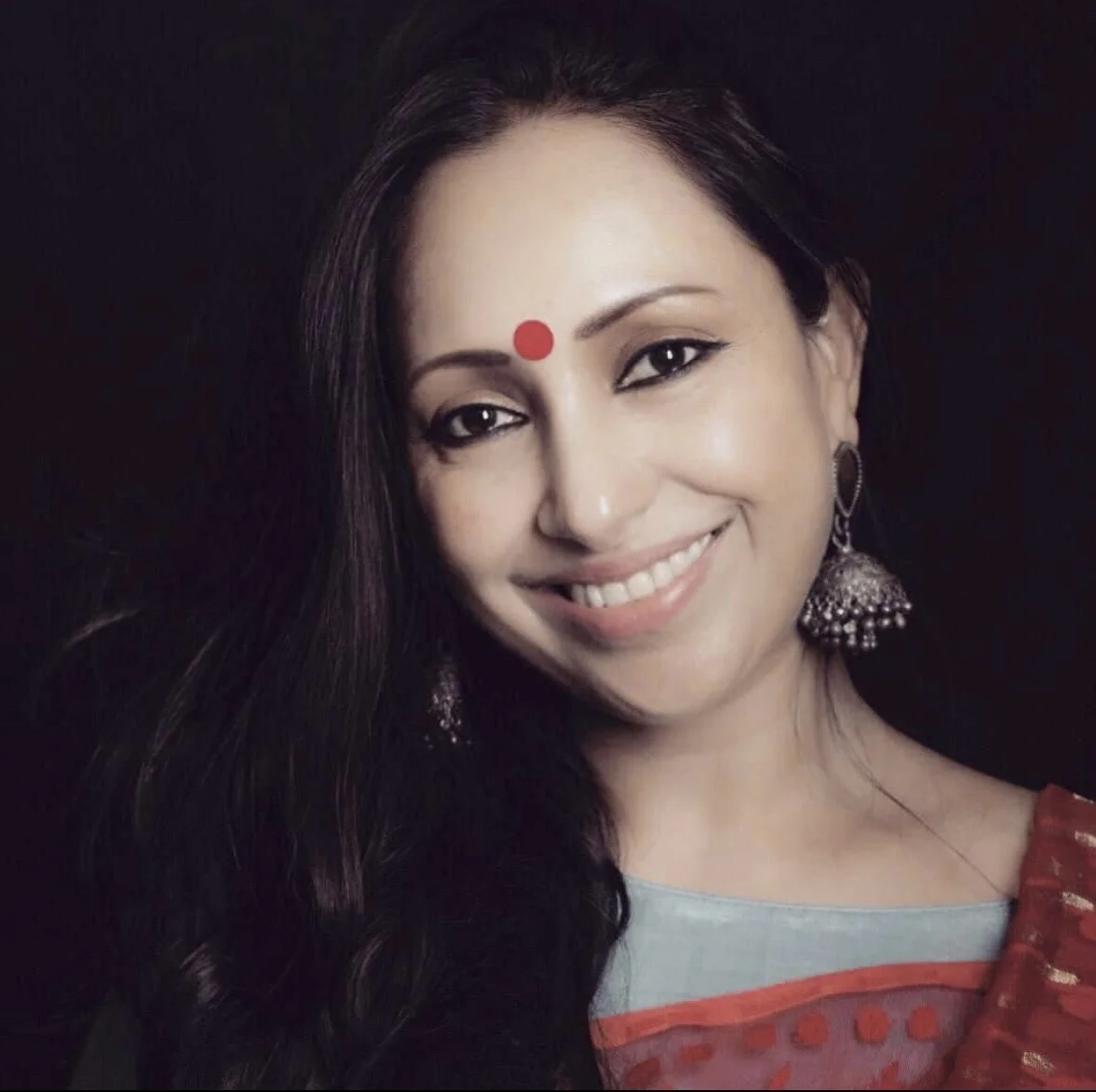
Mohua Chinappa is an award-winning author, podcast host and speaker known for bringing powerful, real-life stories of change from across India to the forefront. She is the creator and host of The Mohua Show and The Literature Lounge.
Lorena Galliot is a French-Venezuelan journalist, producer and teacher who has covered climate change, education, and public health. Her work has been published by National Geographic, FRANCE 24, CNN, Scientific American, The Christian Science Monitor and the New York Times, among others. She earned a masters in journalism from Columbia University and was awarded a Pulitzer Traveling Fellowship.
Mohua Chinappa is an award-winning author, podcast host and speaker known for bringing powerful, real-life stories of change from across India to the forefront. She is the creator and host of The Mohua Show and The Literature Lounge.
Dr. Aarati Asundi is a science communicator who completed her PhD in Biomedical Sciences from UCSF. She is the founder of the science communications company Sykom and creator of the science biography podcast Smart Tea.
Sameer Sasthrabudhe is a documentary filmmaker and Professor of Practice at the IIT in Gandhinagar, India. In 2022, he directed a documentary short on Kamala Sohonie that screened at the National Science Film Festival of India.
Dr. Angeline Jeyakumar is an assistant professor of public health nutrition at the University of Nevada, Reno. Before joining UN, she conducted maternal and child health research at Savitribai Phule Pune University's School of Health Sciences in Maharashtra, India.
Dr. Darinee Alagirisamy is deputy head of the South Asian studies programme at the National University of Singapore. She’s a historian of modern India and the Indian Ocean World, specializing in the colonial and early postcolonial periods.


Episode Transcript
Kamala Sohonie: The Chemist who Wanted to Feed a Nation
<Archival Sound: crowd cheering in Hindu>
<Percussion Music in - Kamala Sohonie Theme>
Mohua Chinappa: In the early 1930s, Gandhi's defiance of unjust British rule resonated throughout India. His nonviolent resistance inspired millions to challenge the status quo. For one young woman, it became a blueprint for her own battle.
Her name was Kamala Bhagvat.
<Melody in - Strings and Flute - Kamala Sohonie Theme>
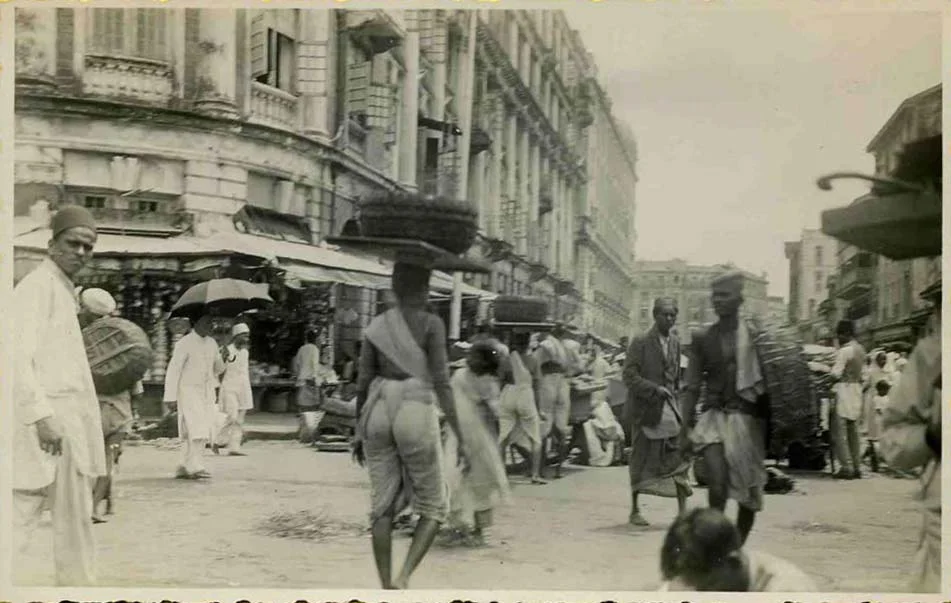
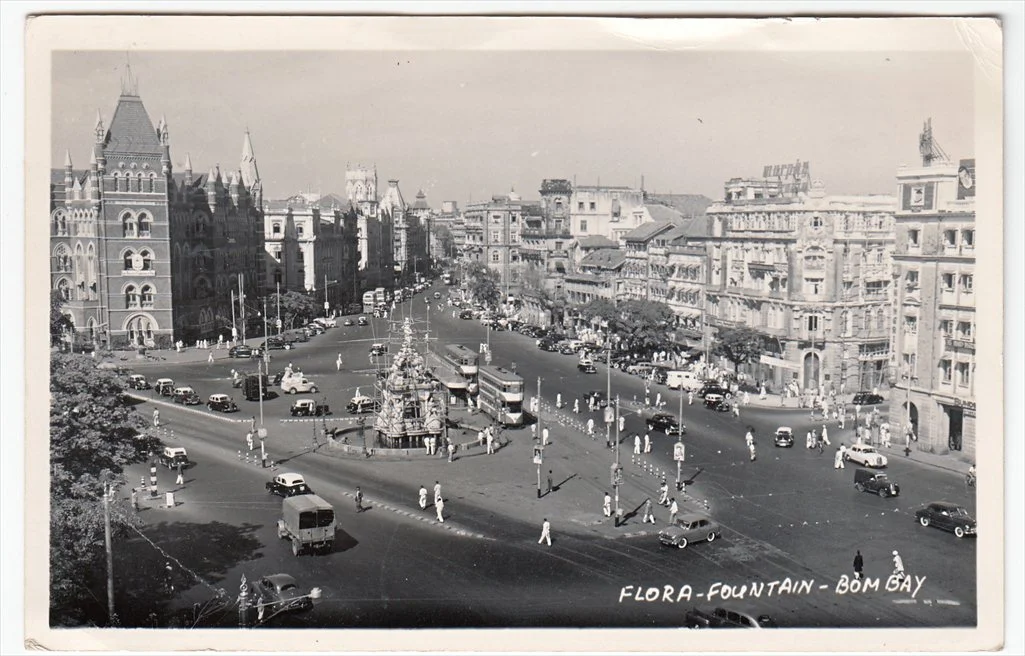
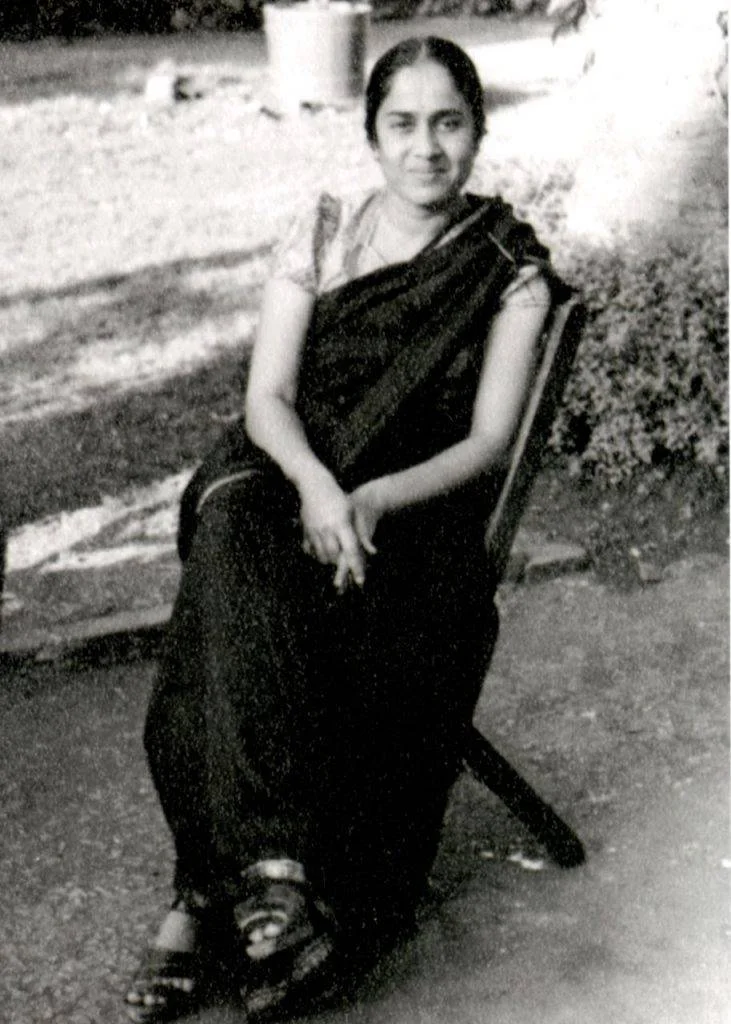
Kamala grew up in the city of Bombay, now called Mumbai, in an educated and progressive family. She had long, jet black hair that ran down her back in a single braid. She aspired to be a chemist, like her father and uncle before her. Never mind that few — if any — Indian women were scientists back then.
<Melody in - Strings and Flute - Kamala Sohonie Theme>
In 1933, Kamala graduated from college in Bombay with top honors in physics and chemistry. She was one of very few women at the time studying science at the college level, and she didn’t stop there. She applied to the prestigious Indian Institute of Science in Bangalore, or IISc for short, for an advanced degree in biochemistry.
Both her father and uncle had gone to the IISc before her, so everyone in Kamala’s family fully expected her to be admitted.
But then...
Sameer Sahasrabudhe: a letter was posted to, uh, their house, uh, which said that your admission has been denied.
This is Sameer Sahasrabudhe. He’s a documentary filmmaker and media professor who made a short film about Kamala. He heard this story first-hand from a family friend.
Sameer Sahasrabudhe: And, uh, the uncle and the father were kind of very disturbed and very surprised because they expected, uh, a positive reply from the alma mater. So they thought, there’s some miscommunication here. Probably they haven't read the application correctly or something.
Mohua Chinappa: Kamala and her family think an in-person meeting will rectify the situation. Equipped with Kamala's diploma and her stellar academic records, they board a train to Bangalore to meet with the institute’s director, physicist and Nobel Laureate C.V. Raman.
Sameer Sahasrabudhe: Dr. Raman says, uh, no, there is no miscommunication here. She can't get admission here. And she said, like, why? And he says, no, we don't have girls getting admitted at this place. As of now, there is no provision.
Mohua Chinappa: No provision to admit girls. Kamala was being denied admission because she was a woman.
It was the first time Kamala Bhagvat saw a door slammed in her face because of her gender, and it wouldn’t be the last.
But she found ways to push those doors open. And her perseverance would eventually earn her a new title: Dr. Kamala Bhagvat, PhD.
Mohua Chinappa: This is Lost Women of Science, I'm Mohua Chinappa.
I host a podcast that highlights the journeys of Indian women who are – and were – changemakers. But I'd never heard of Kamala Bhagvat -- or as she became known after her marriage, Dr. Kamala Sohonie.
When I looked into her story, I was stunned. Stunned by her many firsts: First Indian woman to obtain a PhD in biochemistry. First woman director of the Royal Institute of Science in Mumbai. Discoverer of a vital protein in plant cells, and crusader against malnutrition in India.
But I was also surprised that so few people in India know her name.
Because starting with her initial rejection at the IISc, Kamala never stopped fighting.
This is the story of how one woman's refusal to accept rejection opened doors for generations to come.
Mohua Chinappa: Let's go back to 1933, when Kamala learned she was denied admission at IISc. The director of the institute, Dr. C.V. Raman — the man who explained why Kamala was being rejected — wasn't just a regular academic. He was one of Kamala's heroes.
Aarati Asundi: C.V. Raman was huge because he was the first Indian Nobel laureate in science, and it was a point in history where it was like a great point of pride because, um, India still was under British rule at the time.
Mohua Chinappa: This is Aarati Asundi, a science communicator and host of the science biography podcast Smart Tea. She also has a PhD in biomedical sciences.
Aarati Asundi: And so for an Indian person to show that, you know, people of color can also make these huge, great achievements in science was a huge point of national pride.
Mohua Chinappa: Kamala must have hoped — perhaps even assumed — that the man who’d broken such a significant barrier would support all young Indian scientists… not just the male ones.
So imagine her shock when she realized that her hero was refusing to admit girls into his institute?
Aarati Asundi: I think it was a huge disappointment to her because she's like, you broke this barrier! Why are you not allowing me to break a barrier? If this is how a Nobel laureate is going to treat women, then what hope is there?
Mohua Chinappa: Kamala was furious. And heartbroken. But... she didn't walk away.
Aarati Asundi: She drew inspiration from one of her heroes, Mahatma Gandhi, who was, uh, fighting for Indian Independence at the time. And he had this, um, idea of doing something called a Satyagraha, which is basically a sit-in,
Mohua Chinappa: Gandhi wanted India to achieve independence through peaceful means. His sit-ins and acts of nonviolent resistance were meant to win British hearts and minds and persuade them to relinquish control of the country.
Kamala figured she could take a page from Gandhi's playbook. So, she went to C.V. Raman’s office…
Aarati Asundi: and sat in front of his office and wouldn't leave until she got a quote unquote good explanation as to why he rejected her. And of course, he couldn't provide one.
Sameer Sahasrabudhe: And she said that unless, until you tell me, uh, what I don't have in me. Okay. I am not going from here.
Mohua Chinappa: Sameer Sahasrabudhe again.
Sameer Sahasrabudhe: You have told me that you are denying me because I'm a woman, but tell me what I don't have in me.
Mohua Chinappa: Kamala's tenacity paid off. Grudgingly, C.V. Raman agreed to admit her to the institute. But he had certain specific conditions.
Aarati Asundi: He agreed to admit her under the condition that she spend one year on probation, and if C.V. Raman was satisfied with her work and really felt that she was actually dedicated to science, then he would enroll her as a full student. But then also, the second condition she had to fulfill was that she could not be a distraction to her male colleagues, which is just absolutely ridiculous.
Mohua Chinappa: Kamala swallowed her pride and accepted the conditions. She was in, and that was what mattered to her.
Aarati Asundi: She was very, very determined to prove that she, you know, was indeed capable of doing research and that women in general are capable of doing research. And so that was what kind of drove her to do well.
She was studying what nutritive values, um, Indian staple foods like milk and legumes have. Milk, legumes, beans; these are all things that are really heavily part of the Indian diet and the vegetarian diet. It's what the locals have easy access to and. Are familiar with, basically.
Mohua Chinappa: Kamala's diligent, meticulous work and brilliant mind were quickly noticed by her instructors. In 1935, she published her first paper: "Non-Protein Nitrogen of Pulses.”
Sameer Sahasrabudhe: She literally won the hearts of every faculty member there by her hard work. So the probation was kind of very easily abandoned and she was accommodated.
Mohua Chinappa: As for C.V. Raman, he ended up doing a complete 180.
Aarati Asundi: Even more amazing thing is she changed his mind, really. And after the fact, he started accepting women scientists into his own lab. So she really did break that barrier for him as well.
[BEAT]
Mohua Chinappa: In an essay describing her career, Kamala wrote about her decision to study abroad. Here’s a passage from the essay, read by a voice actor.
Kamala voice actor: [...] I used to spend two hours every day in the library reading the works of eminent biochemists, which inspired me greatly. I wrote to some of these scientists, and to my amazement, I received encouraging replies from them. I made up my mind that one day I would go abroad to meet these great men and work in their laboratories."
Mohua Chinappa: And when Kamala made up her mind to do something... she found a way to do it.
In 1937, after she graduated from the IISc, she applied for two scholarships that would allow her to travel to England to continue her education. And she won both.
Aarati Asundi: so she was able to travel to the UK to Cambridge and try to get her PhD there.
Mohua Chinappa: In December 1937, 26-year-old Kamala arrived in Cambridge, England.
One of the first things she did was visit the laboratory of Sir Frederick Gowland Hopkins, the co-discoverer of vitamins. Hopkins showed that animals couldn’t thrive on diets of pure protein, fat and carbs, leading to his concept of tiny “accessory factors” that add nutritional value to food. He would eventually isolate and identify some of these micronutrients — now known as vitamins.
Kamala was mesmerized. Here, standing right in front of her, was one of the great scientific minds she'd once dreamed of meeting.
Kamala applied for admission to Hopkins' lab, but it was already full. In fact, it was so late in the year that Kamala was finding it difficult to find an open spot in any lab.
But then, to quote from her essay, "the unexpected happened."
Kamala voice actor: "A kind scientist already working in the laboratory offered me the daytime use of his bench, while he would work at night. Professor Hopkins accepted the solution.”
Mohua Chinappa: For the young Indian scientist, it was the culmination of a remarkable journey. Just four years after graduating from university in India, she was now at one of the world’s most famous Universities, studying for a PhD under a world-renowned food scientist.
Kamala voice actor: “I was admitted to this great laboratory on the 18th of December, 1937, the happiest and proudest day of my life."
Mohua Chinappa: At Cambridge, Kamala conducted her most cutting-edge research yet. Aarati Asundi again.
Aarati Asundi: She was looking at how plants respirate, how plants breathe, um, for the plants to generate energy.
Mohua Chinappa: At the time, scientists knew that animal cells generate energy by transferring electrons from one molecule to another — a process called the oxidation-reduction reaction. But they didn't know exactly how that process worked in plants. Kamala studied the cells in certain vegetables and was able to discover and isolate an enzyme associated with a very specific protein called cytochrome c, which plays a key role in the oxidation-reduction process. It was an exciting discovery, because although cytochrome c had been found to exist in humans and other mammals, until then, it had never been seen in plants.
Aarati Asundi: If you find the same protein in humans as you do in apes, it's not like a big deal because it's like, yeah, of course that makes sense. Yeah, we're cousins.
Mohua Chinappa: But in this case, Kamala found the same cytochrome c protein in something that was decidedly not a mammal. She found it in a potato.
Aarati Asundi: Then it's like, whoa, this protein has been passed down regardless of what kind of organism this is, whether it's a plant, whether it's a fungi, whether it's a human, all of these have cytochrome c and so that must mean that it's, you know, extremely important. And then that opened the doorways for people to kind of study it further and say why exactly is it so important? What happens if we get rid of it? And why can we not live without it?
Mohua Chinappa: Kamala’s findings made clear how oxidation-reduction works in plants, deepening scientists' understanding of the process known as photosynthesis, which is how plants make their own food using sunlight, water and CO2 from the atmosphere.
It was an important discovery. And it formed the basis of Kamala's PhD thesis. In 1939, she presented her dissertation — a remarkably brief 40 pages — which was accepted. A first for Indian women.
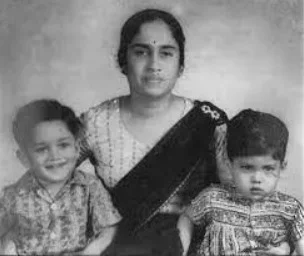
So where would Kamala go from here? She was certainly on the right track for outstanding success in science. According to her son, Anil Sohonie, she began fielding prestigious work offers. Anil doesn't like to sit down for interviews, and he declined to be interviewed for this podcast. But he wrote us in an email that she was "offered the best jobs by leading pharma companies in the USA and Europe."
But at the same time, Kamala’s family was in India—her parents, her roots.
Aarati Asundi: The culture in India is so strong and so different from what you get in European and American cultures. It’s like, your whole family is in India, and you’re used to celebrating these huge festivals, you know, and having all this color and life and family around you. To leave that and go to America, it would be a very hard thing, I think.
Mohua Chinappa: In Europe, Nazi troops were marching unchallenged into Austria and Czechoslovakia — something Kamala must have viewed with alarm. Meanwhile, back in India, Gandhi was continuing his demands for Independence from the British. According to Kamala’s son Anil, his mother was deeply patriotic. She wanted to support the freedom movement, to lend her talents to Gandhi’s cause.
So, Kamala faced a choice that would define the rest of her life: pursue an exciting, lucrative career in the West where her talents were recognized and valued, or return to India — where women scientists were barely tolerated.
That’s after the break.
*******
Mohua Chinappa: So, what did Kamala decide?
War broke out in Europe in September 1939, just months after she finished her PhD. There’s no record of Kamala’s thoughts at this juncture, so we’ll never know if that played into her decision, or if she was driven mostly by patriotism.
Whatever the motive, Kamala ultimately decided to turn down the offers she got from Western pharmaceutical companies.
Aarati Asundi: I feel it was a very different choice than I would’ve made. Like honestly, I would've been like, oh yeah, why am I trying to fight this uphill battle? I'm getting calls from America and Europe. I'm going there and I'm gonna make a lot of money and show you all.
Mohua Chinappa: In late 1939, she boarded a ship back to India. She chose to go home.
It wasn't long before Kamala felt the consequences of her choice. Her career began to suffer. In the essay she wrote, she was open about the struggles she faced
Kamala voice actor: "On my return to India, I found it difficult to find suitable employment. Biochemistry was not taught except in any university in India at that time, except in the medical colleges.
Mohua Chinappa: Kamala joined a medical college in New Delhi, as a biochemist.
Kamala voice actor: but I soon found that I did not fit in there because there was no scope for my research qualifications there."
Mohua Chinappa: It must have been doubly frustrating for Kamala. Here was this young, brilliant, curious scientific mind, with no outlet for her research talents. Filmmaker Sameer Sahasrabudhe explored these questions in his film about Kamala Sohonie.
Sameer Sahasrabudhe: In terms of, uh, the equipment availability or, uh, machines available for research. Like whatever she would be able to get in the UK, will it be available here? And you don't have money, you don't have, how do you work?
And the response he heard, over and over again, was this:
Sameer Sahasrabudhe: therefore she focused entirely on Indian problems.
Mohua Chinappa: She focused on Indian problems. Although Kamala wouldn’t find the equipment, support or funds to continue the kind of research she did in Cambridge, she could use her knowledge about vitamins and plant food content to address something else. Nutritionist Angeline Jeyakumar again.
Sameer Sahasrabudhe: the strongest word I think, which comes across from the work that she did after she came back to India is malnourishment.
Mohua Chinappa: Malnourishment. Or as we more commonly refer to it in the US, malnutrition. In 1940s India, malnutrition was a HUGE problem.
Angeline Jeyakumar: The time that she started her research, um, India was grappling with malnutrition, child undernutrition and undernutrition among women. So these were major concerns.
Mohua Chinappa: This is Dr. Angeline Jeyakumar. She's a nutritionist from southern India, currently working as an assistant professor at the Department of Nutrition at the University of Nevada, Reno.
Angeline Jeyakumar: The outcomes of malnutrition in children were severe, leading to child mortality.
Mohua Chinappa: The problem had deep roots. India was once rich. But it saw its wealth diminish under British rule, leading to widespread poverty and a stunted economy. In the 18th and 19th centuries, India endured multiple long and devastating famines. By some estimates, over 25 million Indian people died of famine during British colonial rule.
According to her son Anil, Kamala wanted to tackle the issue of malnutrition. In his email to us, he wrote: "My mother wanted to serve her country with her knowledge. She wanted to make the population at large aware of the nutritional value of food, especially simple, everyday foods."
So in 1942, Kamala left the medical college in New Delhi to go work at a small Nutrition Research Laboratory in Coonoor, in the southern Indian state of Tamil Nadu.
It must have been quite a shift for her — going from Cambridge University to working in India's capital city to a small laboratory in a sleepy town surrounded by tea estates. She wrote about the isolation she felt.
Kamala voice actor: "Working in the Laboratory was a funny experience: I was mostly left to myself because my colleagues were not accustomed to working with women, and they were shy of me. I put this isolation to good use by reading in the library and studying nutrition for the first time."
Mohua Chinappa: Until then, Kamala's research had been pretty theoretical — she was isolating and identifying proteins and other micronutrients. Now, she wanted to see how she could put that knowledge to practical use. It was new ground for her. And in fact, pretty new in India as a whole. Aarati Asundi again.
Aarati Asundi: no one had really studied the nutritive values of these things. Um, no one really understood exactly what proteins they were giving you, what, um, vitamins or, you know, minerals, these things we're providing to the human body. And if we can understand what these local foods and Indian staples have for our body, we can then kind of help combat malnutrition, we can help build healthier bodies in India.
Mohua Chinappa: Kamala's research in Coonoor looked at ways to use enzymes — the type of proteins she had focused on during her time at the IISc and at Cambridge. She also studied "anti-vitamin" factors: toxic substances that block our bodies from using vitamins properly. Nutritionist Angeline Jeyakumar again.
Angeline Jeyakumar: At that time when nutrition science in India was still emerging, she was among the first to analyze the biochemical composition of Indian food staples.
And she identified the potential to meet the daily nutrient needs of the vulnerable population.
Mohua Chinappa: Kamala’s research also looked for ways to introduce more protein into the largely vegetarian, cereal-heavy Indian diet. She zeroed in on two locally available protein sources: beans and fish.
Angeline Jeyakumar: These were the protein-rich sources that she introduced for a population, um, which had this protein gap. So, she identified both vegetarian and non-vegetarian sources.
Mohua Chinappa: Kamala's research in Coonoor was fulfilling, and she also discovered a love for teaching. Still, she was frustrated. Here's what she wrote:
Kamala voice actor: "I trained a large number of students and published a number of papers during my five years there. However, when the post of director fell vacant, a man with inferior qualifications to mine was appointed as Director. This was a great disappointment to me, and in 1947, I decided to resign and return home to Bombay."
[Pause - new beat]
If Kamala faced disappointment at work, she likely also faced another type of societal pressure. She was 36 years old by then, and still unmarried. Here's Aarati Asundi.
Aarati Asundi: 21, 22 is kind of the age at which women commonly got married. To make it to 36 is quite a feat, you know? To be honest, I'm 36 and I'm not married, and my family's given up on me. completely.
Mohua Chinappa: But leave it to Kamala to buck social norms!
During her time in Coonoor, she met a man named Madhav Sohonie. Madhav was a smart, London-trained business professional. Kamala mentions him in her essay, but she's coy about how they met. Their son Anil tells it this way — here’s a voice actor reading his email to us.
Anil Voice Actor: "My father read about her in the papers and felt she was probably at the same mental level as him. He visited her in Coonoor where she was doing her research work. And that's how they met, clicked and got married."
Mohua Chinappa: That's right. In a society where most marriages were arranged, where women were primarily expected to be mothers and homemakers, Kamala somehow met a man who was attracted to her for her smarts! In fact, Madhav supported her research. He encouraged her to search for another position after resigning from her post in Coonoor. By their son Anil's own admission, they were not a typical Indian couple.
Anil Voice Actor: "My father was unlike the men of those times. He was broad-minded and progressive in his thinking. With their like-mindedness and maturity, it was an ideal match.”
Aarati Asundi: I think a lot of, um, husbands in India kind of expect that once they get married, their wife will stay at home and take care of the kids and give up any career ambitions. And I think that's probably part of the attraction that she had to him, is that she understood that he was someone who supported her research wholeheartedly.
Mohua Chinappa: Kamala and Madhav got married in 1947 and settled in Mumbai. That same year, India underwent a profound transformation. On August 15, 1947, India gained full independence from British rule.
The British left India in a hurry. Lines on a map were drawn between majority Muslim areas and Hindu areas in the north of the country. Almost overnight, an independent India was proclaimed, as well as the independent Muslim-majority country of Pakistan.
Euphoria turned to fear as violence erupted between Hindus and Muslims around the newly drawn borders, despite Gandhi’s calls for peace. The following year, Gandhi was assassinated by a Hindu nationalist.
As the newly independent country mourned its beloved Mahatma, Kamala doubled down on her work against malnutrition. To filmmaker Sameer, it was her way of supporting the freedom struggle.
Sameer Sahasrabudhe: Even if we are free, if we are malnourished and we are not strong enough to survive, I think that would not be a service to society.
Mohua Chinappa: In 1949, Kamala joined the new department of Biochemistry at the Institute of Science in Bombay, She dove back into her research on the nutritional value of Indian staple foods.
This time, her work caught the attention of someone important. That was Dr. Rajendra Prasad, the first president of the newly independent Republic of India elected in 1950. He was named Minister for Food and Agriculture of India’s transitional government before being elected president. So he was very focused on the question of how to feed India.
Aarati Asundi: After the British have left, he's trying to set up this new, uh, form of running things. And so he again, is struggling with this problem of how do we feed all these people? How do we make sure that everyone gets the proper nutrition?
Mohua Chinappa: As Prasad was grappling with these issues, Kamala’s research came across his desk, and he decided to contact her with an idea that came a bit out of left field.
Aarati Asundi: He called her and asked her, would you be able to study the nutritive properties of neera.
Mohua Chinappa: Neera. What’s that? For the uninitiated, Neera is a drink that is made with the sap of a type of palm tree that is found all over the Indian subcontinent.
In the president’s mind, Neera might be a solution to India’s battle with malnutrition. It ticked many boxes. It was locally produced, nutritious and – importantly – non-alcoholic. People had long intuited that it had health benefits, but it had never been properly studied.
Darinee Alagirisamy: At the time of independence, at least, it was something that elite groups associated with health and nutrition; it was not so prevalent, um, the underclasses of society.
Mohua Chinappa: This is historian Darinee Alagirisamy. She's the deputy head of the South Asian Studies program at the National University of Singapore. She explains that as a follower of Gandhi, Prasad wanted to continue the Mahatma’s crusade to make India alcohol-free. A tall order.
Darinee Alagirisamy: Prohibition was bound up with, uh, the overarching struggle to overthrow colonialism. This is what Gandhi wanted, and so India was, um, determined to make it happen.
Mohua Chinappa: And neera was available in almost any part of India.
Darinee Alagirisamy: Gandhi had also talked about rural uplift as one of his dreams. Um, this notion that the village is really the heart of India. And if we can find a way to make villages self-sustaining units, then the nation would stand on its own two feet, and it would stand proud on its own two feet.
Mohua Chinappa: So Kamala was given the task — by the president himself — to study neera for its nutritional value. She isolated and analyzed its micronutrients the same way she'd done for other Indian staples, and discovered that the drink contained high levels of vitamins B and C, plus iron — all in very stable forms.
Bingo! Here was an inexpensive, widely available drink, packed with essential nutrients. It seemed perfect for India's fight against malnutrition. Rajendra Prasad was happy, and Kamala was awarded the presidential Rashtrapati Award for her work.
But… there was a problem.
Darinee Alagirisamy: The problem was that in a tropical climate like the one that we have in India, fermentation is going to happen.
Mohua Chinappa: And quickly. It turns out that when neera fermented -- something that could happen within hours in the Indian heat -- it would turn into a popular alcoholic drink called toddy.
There’s a story about how this even happened to Gandhi. A group of toddy producers came to him one day to try to convince him to rethink his stand on prohibition.
Darinee Alagirisamy: And he says, actually, you can switch to producing neera and you know, your business will not be hurt and you know, everyone's gonna be happy.
Mohua Chinappa: To prove his point, Gandhi opens a bottle of what he thinks is non-alcoholic neera and offers some to his guests.
Darinee Alagirisamy: But it becomes very embarrassing for Gandhi because, upon tasting it, it becomes evident that that is not neera at all! It has become toddy somewhere between the time it was collected and the time of Gandhi's presenting it, um, to his guests.
Mohua Chinappa: That was the central problem. In India's post-independence era, the technology and the investment to ensure refrigeration just wasn't there to halt or even delay fermentation.
Kamala was the face, then, of a campaign doomed to failure.
Darinee Alagirisamy: She had to basically defend neera. So that was the constraint within which her work, uh, had to be framed. Neera had to work.
Mohua Chinappa: But it didn’t. I wonder what Kamala thought of the way this played out. Neera as a health drink for the masses quietly disappeared, and she was left to go back to her research and her teaching.
The stellar career that she might have had if she had not gone back to India — did she think about that? Did she regret that she never got to do any more work on the protein cytochrome c that had made her a star in England?
Kamala's name isn't even commonly associated with the protein. If you read the Wikipedia entry for cytochrome c, for example, there's no mention of Kamala Sohonie as the researcher who found the protein in plants. Here's Aarati Asundi.
Aarati Asundi: Kamala Sohonie was not the first person to discover cytochrome c in general. It had already been discovered in mammalian cells. And I think that's just kind of how science in general is. Like, you remember the first guy on the moon. You don't remember the second.
If Kamala did have regrets about returning to India and giving up that research, she never expressed them, according to her son Anil. "Yes, her career did suffer," he wrote in his email to us. "But she was still steadfast in working in India. She only wanted to serve her country with her knowledge."
And she did that to the end.
Aarati Asundi: I think one of the remarkable things about Kamala was that she was a great communicator and she really wanted to make sure that her work in nutrition was useful to people. And the people that she was most interested in helping and targeting, they’re basically the ones that run the household.
Mohua Chinappa: After her retirement, Kamala joined the Consumer Guidance Society of India, or CGSI, India's first consumer rights organization. She was later elected its president.
At the time, there was little to no quality control of the foods sold in stores and markets across India, and vendors were known to cheat consumers by adulterating food products. For example, adding things like brick powder to spices, or white powders to milk, to bulk them up.
And those consumers buying food were, by and large, women.
Aarati Asundi: The people that she was most interested in helping and targeting were the wives and the mothers. They're the ones who are cooking for their families. You know, they're the ones who take care of nutrition for the entire population of India. Um, and so she was very deliberate, I think, and very smart in the way that she tailored all of her communication materials to housewives.
Mohua Chinappa: Kamala designed a simple kit that housewives could use to check the food they bought for any signs of adulteration. She also wrote numerous articles on consumer safety for CGSI’s magazine, Keemat, which was distributed to thousands of members and addressed to the wider public.
The group still publishes a yearly food adulteration testing manual which is made available online for free.
Kamala’s work was an early example of taking nutrition research in the lab and using it to inform the broader population. Angeline Jeyakumar again.
Angeline Jeyakumar: I think her initiative actually paved the way for the translation of research. That’s the beauty of translating all her laboratory findings into the community’s needs.
Mohua Chinappa: And Sameer Sahasrabudhe.
Sameer Sahasrabudhe: I think that is an extremely visionary work that has not been done by many scientists.
Angeline Jeyakumar: So it's a full circle. I think she was very clear of the vision and, um, I would say it's a legacy left behind for all biochemists, all molecular biologists, anyone who's working in the laboratory. So her work still has value today.
Mohua Chinappa: In 1964, Kamala Sohonie was named director of research at the Royal Institute of Science in Mumbai. That must have given her great satisfaction after she was passed over early on in her career to run an institute in favor of a less qualified man. Reflecting on this, she wrote:
Kamala voice actor: “I took up the Directorship as a challenge, to show that a woman could run the institute as well, if not better, than a man."
Mohua Chinappa: And she did. Kamala ran that institute until her retirement, mentoring countless students along the way. In 1998, she collapsed onstage at an event organized in her honor by the Indian Council of Medical Research. She died shortly afterwards, at the age of 87.
But the door she pried open when she first sat outside C.V. Raman’s office has stayed open. The path she carved made room for others. Today, nearly half of all science graduates in India are women. A slow revolution that Kamala helped start with one simple refusal: she would not take no for an answer.
Mohua Chinappa: This has been Lost Women of Science, I’m Mohua Chinappa.
This episode was produced and sound designed by Lorena Galliot. Thanks to our executive producer Katie Hafner, and former Senior Managing Producer Deborah Unger.
Thanks also to our program manager Eowyn Burtner, our senior managing producer Natalia Sanchez Loayza and our co-executive producer Amy Scharf.
Our Sound Engineer was Hansdale Hsu. Our intern was Issa Block Kwong. We had fact-checking help from Lexi Atiya. Lizzy Younan composes all our music. Lily Whear designed the art.
We’re grateful to Shanti Violet and Parul Shrivasta from The Mohua Show, and Aarati Asundi from the Smart Tea podcast for their help with this episode. We encourage you to check out their wonderful podcasts!
Lost Women of Science is funded in part by the Alfred P. Sloan Foundation and Anne Wojcicki Foundation.
Thanks also to our publishing partner, Scientific American. We’re distributed by PRX. You can learn more about our initiative at lostwomenofscience.org, and while you’re there please subscribe so you never miss an episode and don’t forget to click on that all important, ever present donate button. Please also follow us on Facebook and Instagram at @LostWomenSci. That’s @LostWomenSci.
I'm your host, Mohua Chinappa. Thank you so much for listening.
Listen to the Next Episode in this Series
More Episodes
Listen to the complete collection of episodes in this series.