April 16, 2026
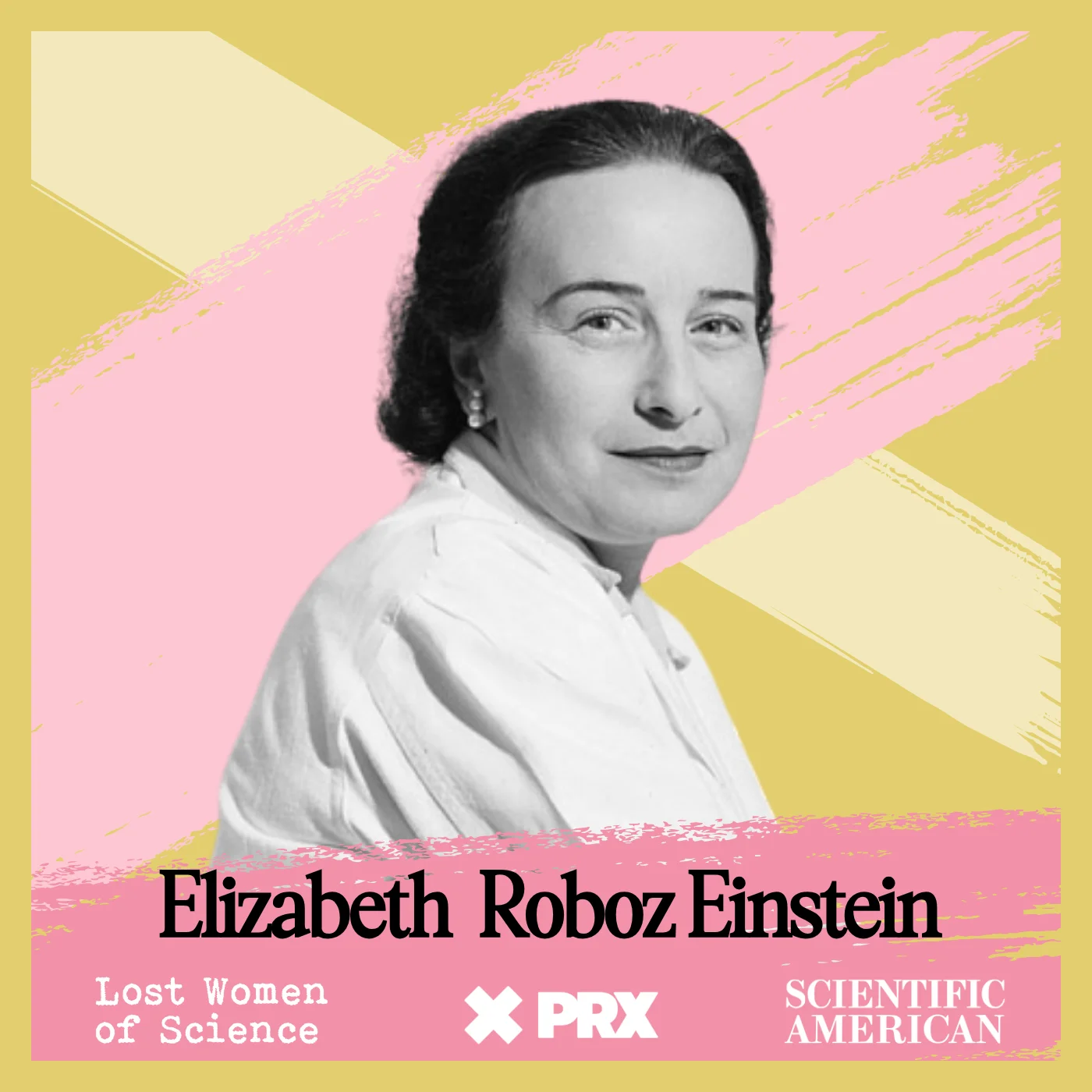
Elizabeth Roboz Einstein: The Determined Genius Behind a Multiple Sclerosis Breakthrough


April 16, 2026
Elizabeth Roboz Einstein: The Determined Genius Behind a Multiple Sclerosis Breakthrough
The Hungarian refugee who came to the United States with nothing but a diploma, and made a breakthrough discovery in the burgeoning field of neurochemistry.
Episode Description
Elizabeth Roboz Einstein’s life was shaped by the forces of history. She studied bioorganic chemistry at the University of Vienna in the 1920s and then left her home country of Hungary during World War II, before German troops invaded — practically a miracle for a single, Jewish woman. In the U.S., she blazed a trail in the brand new field of neurochemistry; her seminal research into multiple sclerosis (MS) unlocked key findings that would make effective medical treatments for MS possible.


Marcy is an award-winning audio producer who has covered science, technology, history, culture, sports, business, and celebrity chat. Her work can be heard on Next Question with Katie Couric, Overheard at National Geographic, and Note to Self (WNYC), among many others.
Elizabeth Block’s writing has explored fascism, technology, love, and marginalized identities. Recipient of the Christopher Isherwood, Sigma Xi Scientific Society, Djerassi Resident Artist Program Residency Awards, etc., her work appears in TDR, The Brooklyn Rail, Harvard Film Archive, Chain, Penguin Random House, SF Chronicle, Canyon Cinema, Contemporary Review of Fiction, KQED, etc.
Marcy is an award-winning audio producer who has covered science, technology, history, culture, sports, business, and celebrity chat. Her work can be heard on Next Question with Katie Couric, Overheard at National Geographic, and Note to Self (WNYC), among many others.
Elizabeth Block’s writing has explored fascism, technology, love, and marginalized identities. Recipient of the Christopher Isherwood, Sigma Xi Scientific Society, Djerassi Resident Artist Program Residency Awards, etc., her work appears in TDR, The Brooklyn Rail, Harvard Film Archive, Chain, Penguin Random House, SF Chronicle, Canyon Cinema, Contemporary Review of Fiction, KQED, etc.
Dr. Stephen Hauser is the Robert A. Fishman Distinguished Professor in Neurology at the University of California, San Francisco, and Director of the UCSF Weill Institute for Neurosciences.
Harriet Freidenreich, PhD, is professor emerita at Temple University and author of several books on Eastern and Central European Jewish history.
Dr. Riley Bove is the Rosenberg Ach Family Endowed Professor in Neuroimmunology at the University of California, San Francisco, and a practicing neurologist and clinician scientist at the UCSF Weill Institute for Neurosciences.
Diana Coleman is an author and retired fundraiser.


Episode Transcript
Elizabeth Roboz Einstein: The Determined Genius Behind a Multiple Sclerosis Breakthrough
Marcy Thompson: It's May 15, 1940.
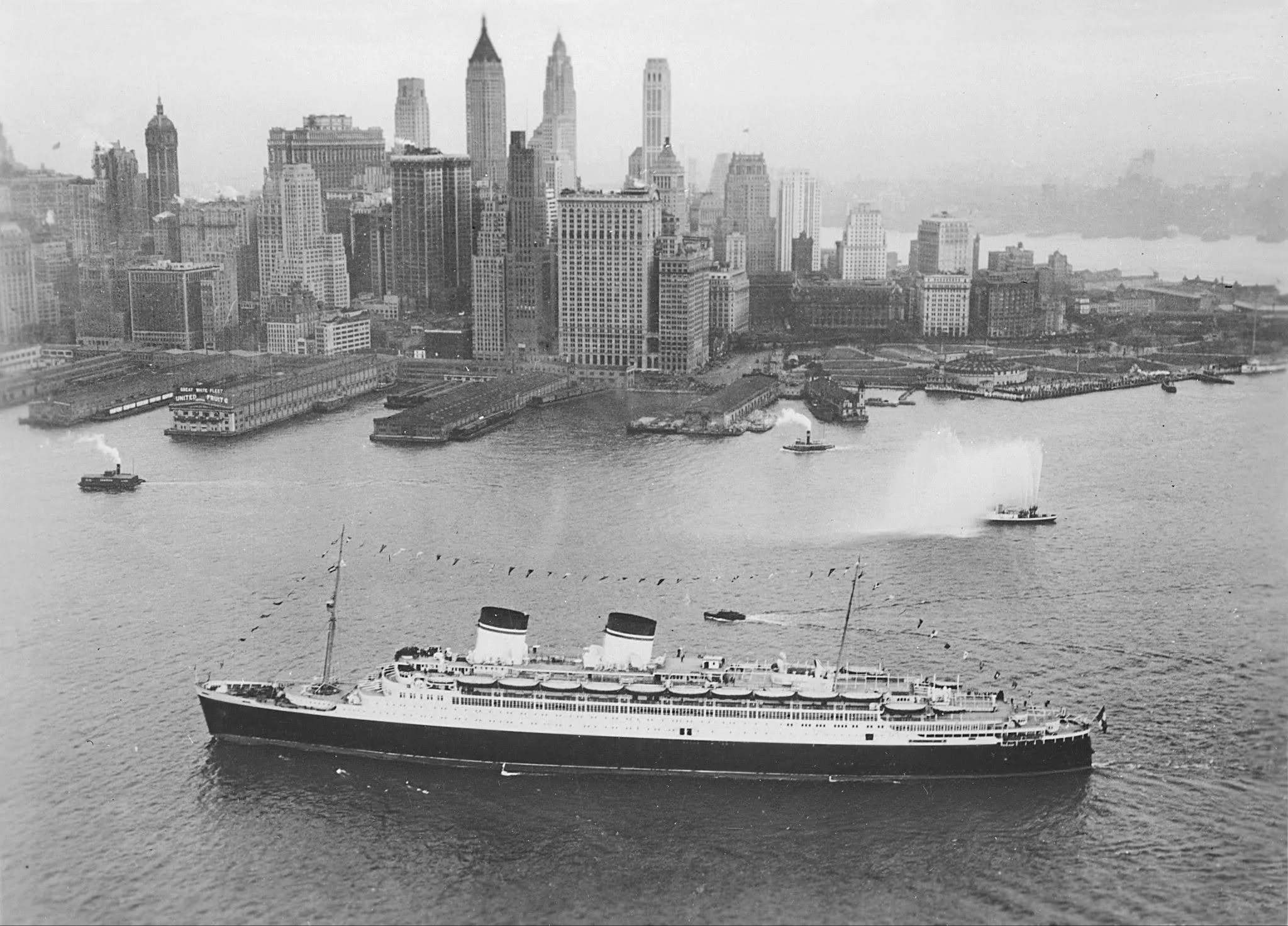
A 36 year-old Hungarian Jewish woman boards the Conte di Savoia, an Italian steamliner.
She's a long way from home. She is alone. She has said goodbye to her mother and siblings in Hungary and made her way here, to Genoa, to embark on a journey to New York City.
The Conte Di Savoia was built as a luxury cruise ship. But on this voyage, its passengers are not luxuriating. They're evacuating.
World War two is raging in Europe. The Netherlands, Belgium, and France have fallen to Hitler. Germany's domination of Western Europe is all but complete. German troops now push east towards Central Europe––the place our passenger, Elizabeth Roboz, calls home.
The Conti de Savoia is a lifeline for everyone on board––351 US citizens and 600 Central European refugees all escaping the escalating war. The boat sails from Genoa in complete darkness, a precaution against air raids. It somehow manages to pass through Gibraltar, and west into the Atlantic, without detainment and search.
Elizabeth Roboz knows she is one of the lucky ones. She's been granted a preferential visa because of her qualifications as an agricultural specialist, but her fate is far from certain … She, along with everyone else on this dark boat, must grapple with the fear of not knowing what lies ahead, and the anguish of not knowing what will happen to the families they've left behind.
The ship docks in New York City on May 23rd. Elizabeth could not have known that in less than two weeks, Italy would enter the war––that the Conte di Savoia would never bring another refugee to the U.S., and would in fact be sunk by the Germans. And it would be years before she'd know the fate of her family in Hungary, and learn what they endured when Hitler did, in fact, march into Budapest.
All she can do as she disembarks into this strange new country is trust in what she's been taught, rely on her fierce intelligence and ambition, and move forward.
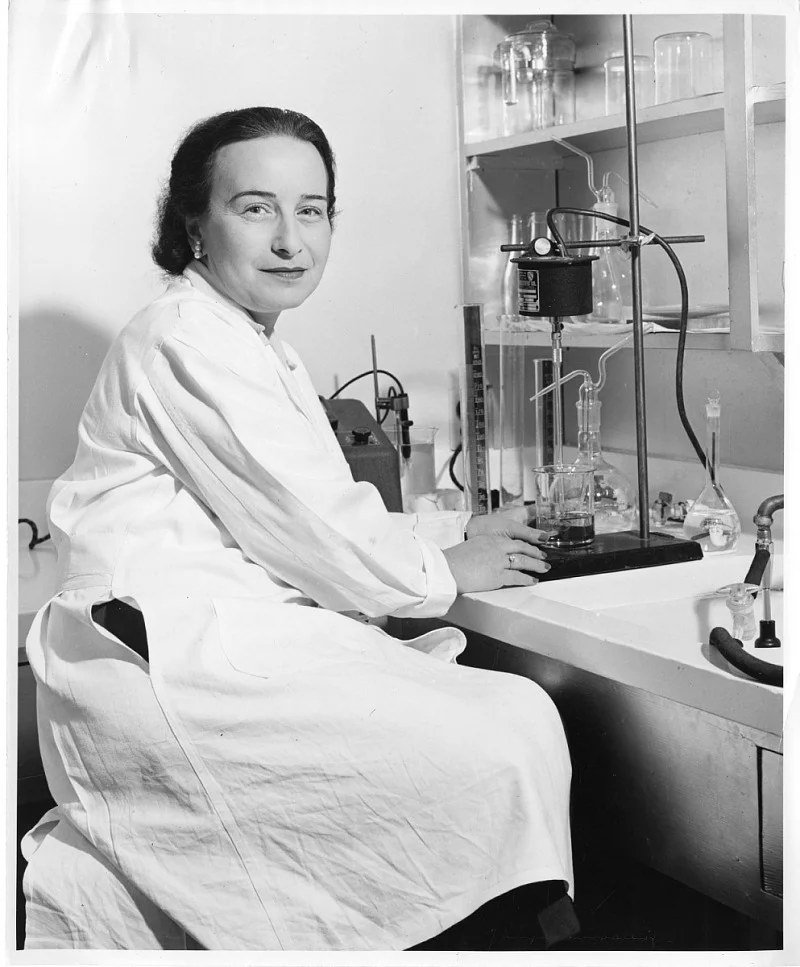
This is Lost Women of Science. I’m your host, Marcy Thompson. Today, we tell the story of what happened to Elizabeth Roboz––who would later in her life become Elizabeth Roboz Einstein. Yes, that Einstein. Over the course of her life she'd help pioneer a brand new field ––neurochemistry. And, she’d solve some of the most difficult scientific mysteries of her time: the cause of diseases affecting the brain and how we treat them.
Dr. Stephen Hauser: To me and to many of my colleagues in the neurosciences, understanding and treating diseases of the brain is the most important part of medicine. It's what makes us human, unique, and important.
Marcy Thompson: and she'd undertake groundbreaking research that led to a deeper understanding of multiple sclerosis.
But was her success a result of uncanny luck? Or the dogged determination to move forward under any circumstances? Either way, there are untold numbers of people who probably don't realize how fortunate they are that Elizabeth Roboz got on that boat that day in 1940.
Otto Roboz: I was born in Transylvania, which was at that time, a part of Hungary. And my father was their chief rabbi and…
Interviewer: chief Rabbi of a town.
Otto Roboz: Of the town. Yes.
Marcy Thompson: This is Elizabeth Roboz Einstein's younger brother, Otto Roboz, in a 1989 interview conducted by the Raoul Wallenberg Project, and is now part of the American Holocaust Memorial Museum archive. Otto Roboz was about 82 years old at the time of this conversation.
Interviewer: Which town was that?
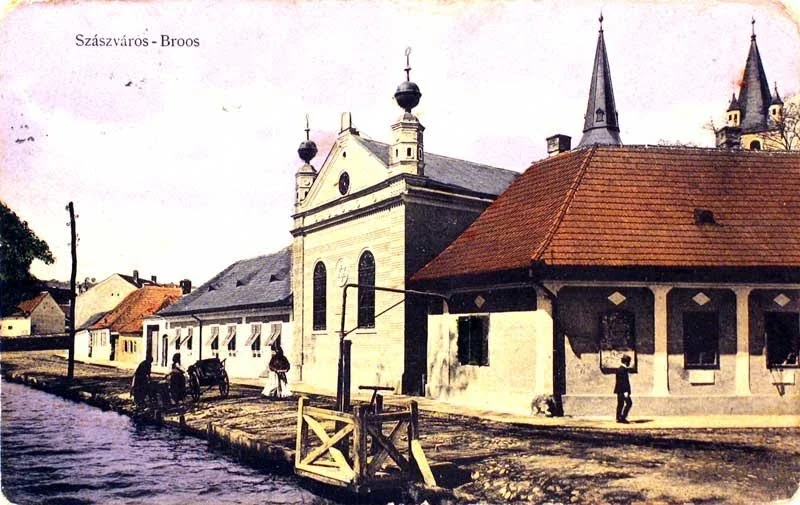
Otto Roboz: They called in Hungarian “Szászváros.”
Marcy Thompson: Elizabeth and Otto had four brothers and sisters. But the family's name was not Roboz. It was Rosenbluh. Their father, Jeno, was a well educated man who attended the rabbinical seminary at the university in Budapest––where he studied philosophy and literature. His synagogue was located in the center of Szászváros, Transylvania, part of Hungary at the time. In 1904, when Elizabeth was born, there were probably about 200 Jews in a town with somewhere around 6,000 inhabitants.
Harriet Freidenreich: They had a Jewish community and was fairly small because not that many people lived in this town to begin with.
Marcy Thompson: This is Harriet Freidenreich, Professor Emerita at Temple University in Philadelphia. A historian who has studied Jewish history, Eastern European history, and later, women’s history.
As of the emancipation of Jews in Austria Hungary in 1867, Jews were allowed to move freely across the region.
Harriet Freidenreich: It's not unusual for Jews to be living in a small town in Transylvania in that era.
Marcy Thompson: Dr. Freidenreich explains that Elizabeth's family probably wouldn't have experienced much, if any, anti-semitism at that time.
Harriet Freidenreich: Jews were not necessarily being persecuted in Hungary at that point.
Marcy Thompson: The town where Elizabeth and her family lived had one synagogue. And Elizabeth’s father was its leader.
Otto Roboz: My father came from a very conservative family. But, the town where he was chief Rabbi was mostly called Neolog.
Marcy Thompson: Neolog Judaism was a specifically Hungarian phenomenon. It prioritized Hungarian nationalist identity by retaining the customs of Magyar, or Hungarian people, and especially the language of the communities where they lived.
Harriet Freidenreich: Hungarian Jews did not usually speak Yiddish. They increasingly spoke Hungarian. They also know German.
Marcy Thompson: Speaking German allowed Elizabeth to receive a secular education, and would make it possible for her to eventually work in Hungarian society.
In the span of barely a lifetime, from the late 1860s to the early 20th century, life for Jews in Central Europe had changed radically; and opportunities were becoming available to women for the first time.
Harriet Freidenreich: The women follow in the men's footsteps and their role models are not their mothers. It's their fathers or their brothers. They didn't want to become men, but they wanted an education.
They wanted to be independent and to be able to support themselves because some of them thought that they might have to support themselves.
Marcy Thompson: At the age of 10, Elizabeth would see first hand what would happen when her mother, an uneducated woman with six children, would have to support herself on her own. Her brother, Otto, remembered it well.
Otto Roboz: My father died in 1914.
Interviewer: When you were quite young?
Otto Roboz: I was quite young.
Marcy Thompson: The sudden death of their father was a shock. It was on the eve of World War 1 and the family moved west to the Hungarian town where Elizabeth’s mother was born.
They received a very small pension, so her mother took in needlework and lodgers to bring in income. According to Elizabeth, she and her siblings had a very hard life, but they received a good education.
Elizabeth was able to attend a relatively progressive Lutheran “gymnasium,” or secondary school with the promise to give its students the "weapon of education."
For a period of about four years, the school accepted girls, which, fortunately, for Elizabeth, is exactly when she attended. She made the most of the opportunity.
Elizabeth excelled in all the subjects that would prepare her to complete the all-important matura exam and enroll in university. But when she graduated in 1920, Hungary introduced an anti-semitic law often referred to as the Numerus Clausus.
Otto Roboz: The numerous clauses was a very big document that Hungary was the first European country where anti-Jewish law was voted into Parliament.
Marcy Thompson: This law placed a restrictive cap on the number of Jews who could be admitted into Hungarian universities. This forced Elizabeth to make a choice: to guarantee admission to a good school, she would need to leave Hungary.
Harriet Freidenreich: The obvious place for her to go would be to Vienna and she would, of course have known German
Marcy Thompson: The University of Vienna was one of the pre-eminent institutions in Europe. It was open to women, it was open to Jews. And Elizabeth had been fortunate enough to receive the rigorous education required to attend.
As a teenager, she left conservative Hungary and found herself in the dynamic city of Vienna, Austria. She stepped inside a progressive bubble with a sizable Jewish population.
Harriet Freidenreich: Not a little bubble. A big bubble. There were almost 200,000 Jews living there.
Marcy Thompson: Elizabeth arrived in Vienna not long after the Hapsburg Empire had collapsed. The city was still reeling from the devastation of the first world war. Food shortages were common, starvation and illness were stark realities. This era was dominated by the Social Democratic Party.
Harriet Freidenreich: Vienna was known as Red Vienna, i.e. it was social democratic, and Jews were dominant within the Social Democratic party in Vienna and within the government in Vienna.
Marcy Thompson: It was a historic moment for Vienna, and for Elizabeth. As a gifted female student from a Jewish background, she had always found herself in the minority. But suddenly she was among a much larger group of young, Jewish women scholars––all of them working towards something quite unusual.
Harriet Freidenreich: It wasn't the sort of thing that girls were expected to do, but these women were just determined to know more, to learn more.
Marcy Thompson: It wasn't easy. Elizabeth lived in a small, stuffy room with no window to the outside. She wrote that "Sometimes I felt it did not have enough air." And so, she spent her time at the library. She received financial aid by working in the chemistry department, preparing equipment and writing notes on experiments on the classroom blackboard.
But Elizabeth did have some fun.
For the roughly eight years she lived in Vienna, her greatest joy was attending performances of the Vienna Opera, where standing room tickets were available.
She may have also been swept up in Red Vienna's concept of the "Neue Frau," or "new woman." An independent, progressive-minded figure fighting for her rights: to vote, to retain control over her reproductive rights, and to receive an education.
Harriet Freidenreich: They wanted to have skills so they could support themselves and not be dependent on a husband.
Marcy Thompson: Elizabeth was in no rush to marry. She was dedicated to studying chemistry and physics. She published her first paper while still at university about the chemical composition of the bark of Hawthorne: a plant long known for its anti-inflammatory, and antioxidant properties. Her early search to understand the function of plants would eventually lead to a remarkably similar scientific counterpart: the human brain.
She graduated, summa cum laude from the university in 1928 and returned to Hungary. She got a job working at a Jewish-owned agricultural company in Budapest. This type of work was extremely rare for a Jewish woman, even one with her education.
The company Elizabeth worked for grew sugarbeets and refined them. Although she was initially responsible for performing routine tests, the president soon saw that she was overqualified, and promoted her. She established a plant nutrition laboratory and was sent to international meetings as a scientific representative.
Her career was moving forward, and she dedicated herself to it fully. During this period, she changed her name from Rosenbluh to Roboz on her scientific papers. Roboz was a Hungarianized version of her surname, though still considered Jewish in origin.
And it appears her siblings also changed their names to Roboz, most likely as a way of identifying themselves as true Hungarians.
Regardless of how nationalistic Jews felt as Hungarians, anti-semitism was on the rise in Hungary throughout the 1930s.
Increasingly, Elizabeth’s work-related travel became more dangerous. Her boss was arrested. It was rumored that his wealth was confiscated and he committed suicide.
By 1940, war between Germany, France, and Britain was well underway, and German troops were on the move towards Central Europe. To survive and have a career, Elizabeth needed to leave Hungary. And leave the continent.
The United States would have been high on the list of anyone leaving Europe, but that was much easier said than done.
Harriet Freidenreich: Jews had a hard time getting out and admitted to the United States.
Marcy Thompson: That’s because of the Johnson Reed Act of 1924––one of the most restrictive and xenophobic immigration policies in U.S. History. Even as the immigration crisis in Europe exploded during World War II, visas to the US faced severe quotas by countries from around the globe.
In Hungary, the number of visas was limited to less than 500 per year. By some estimates, a Hungarian applying for a visa to the US in 1939 could have been on a waiting list for as long as 54 years. And very few single women were granted visas.
But Elizabeth had an education and a job in plant science …
Otto Roboz: She was very, very fortunate that in 1940 she got an American visa.
Marcy Thompson: This was a huge stroke of luck. Agricultural scientists were in high demand in the US at that time, which allowed her to get a non-quota visa, which meant no waiting.
So, she said goodbye to her family. She got on that Italian steamliner in Genoa and headed into the unknown. When we come back, we’ll find out what happened when Elizabeth stepped off that boat in New York City, and how she made the leap from sugar beets to neuroscience.
Marcy Thompson: Elizabeth crossed the United States by train, financed by a loan from the American Association of University Women. She spoke no English, but found a job in Sacramento, California, at the Weyl-Zuckerman & Company––the largest potato grower in the US, and cultivator of Elizabeth's specialty: the sugar beet.
After two years there as a plant nutritionist, Elizabeth took a trip to CalTech in Pasadena, where she met Dr. Arie Haagen-Smit, a professor of bioorganic chemistry and the "father" of air pollution control. She would later write that she was just wandering around the biology building and she bumped into him. But his reputation for hiring Jewish refugees may have influenced Elizabeth’s visit.
Harriet Freidenreich sees it this way.
Harriet Freidenreich: Antisemitism would not have been as much of a factor in the United States at that time, except for getting jobs, and especially if you wanted to work at a university, it was very difficult. And for women, almost impossible.
Marcy Thompson: So, finding the right connection was key––and this was a big opportunity for Elizabeth. Right there in the hallway of CalTech, Elizabeth pulled out her Ph.D. diploma and asked Dr. Haagen-Smit for a position at Caltech. She started the next week as his assistant, which would have been the only option for a woman.
Harriet Freidenreich: They always had the word assistant after their names.
Marcy Thompson: But she had found an inroad. Jobs for women in higher education in 1942 were few and far between.
Harriet Freidenreich: She got the job because she had the right education and experience, and most women did not.
Marcy Thompson: While at CalTech, Elizabeth made lasting friendships, including with fellow Hungarian immigrants on the faculty. But during this time, she experienced significant “inner turmoil,” as she called it, trying in vain to make contact with her family in Budapest.
And since the glass ceiling was quite low, and she could not rise above the rank of assistant, Elizabeth stayed at CalTech for just two years.
And so began a series of university jobs that would take her around the country. She landed positions at the University of Wyoming and then at Stanford. The path she took shows her ambition to rise above the level of assistant in search of a tenured position.
And, it was hard. Like many female scientists at the time, Elizabeth was competing against men for jobs.
And changing jobs every couple of years meant constantly pulling up roots––if she put any down to begin with. She was very much on her own. No family, just a few friends. And single. Although perhaps that was a good thing.
Harriet Freidenreich: Since she's single, she could move around and she'd been married, she would've been more tied down and she couldn't have gone to those places.
Marcy Thompson: During this time, Elizabeth’s research trajectory was moving away from plant science, and more fully into biochemistry.
In 1952, she presented a paper to the American Society of Biological Chemists about her research at Stanford on pectin––a structural carbohydrate in plant cell walls that can be broken down by an enzyme.
It caught the eye of the Chairman of the department of biochemistry at Georgetown University, who was looking for a researcher and an associate professor who could teach medical students. At last she had found a job that matched her ability.
Harriet Freidenreich: That was a good job. Associate professor of biochemistry, that's tenured. The men would've had a hard time getting that job.
Marcy Thompson: And it was at Georgetown in the early 1950s that Elizabeth began to work in a brand new field: neurochemistry.
Since her salary was paid by the neurology department, Elizabeth needed to learn everything there was to know about neurochemistry, which was in its infancy. She attended lectures on pathology of tumors and other brain conditions, read the literature, and even observed brain-cutting sessions. And then she turned her focus to multiple sclerosis or MS, persuading the chair to let her focus on this disease alone. Almost immediately, she began publishing papers on the disease, zeroing in quickly on the role of myelin as a target of research. It proved to be a revolutionary approach.
In the early 1950s, MS was an extremely mysterious illness with very few treatments.
In MS the body's immune system attacks the central nervous system causing weakness, blurred vision, lack of coordination, muscle spasms, and cognitive issues. It often begins when patients are in their prime: between 20 and 40 years old.
Dr. Stephen Hauser: When the nervous system is not working properly, we are very much, uh, less human in many respects.
Marcy Thompson: This is Dr. Steve Hauser, an internist, neurologist, and director of the Weill Institute for Neurosciences at University of California San Francisco.
Dr. Stephen Hauser: I've been involved in multiple sclerosis research since the mid 1970s.
Marcy Thompson: Dr. Hauser explains that in the early 1950s, when Elizabeth entered the field, MS research was guided by a group of driven scientists who were compassionate pioneers. But they were often frustrated by the complete lack of science in this area.
Dr. Stephen Hauser: The world of neuroscience and medicine was pre-therapeutic. We could do so little for patients. On the other hand, the community of people, in part because it was so small, was very closely knit.
Marcy Thompson: The emotional impact of working on such a difficult disease was something Elizabeth had to contend with even though she didn’t spend much time with patients.
But she recounted a story about a man she met at the VA Hospital in Washington DC next door to her apartment. She was picking up samples of cerebrospinal fluid to take back to her lab, when a nurse told her that a patient––a former professor of physiology––wanted to meet her. He was in the final stages of multiple sclerosis, and had been abandoned by his wife and family.
On Thanksgiving day, Elizabeth met with him. And the next day, he died.
For a woman who wrote very few stories about events that impacted her life, this one remained memorable even decades later.
In 1953 while still at Georgetown, Elizabeth received word that her brother, Otto, was coming to the U.S. a full eight years after the end of the war. She was finally reunited with him––learning the details of their family's life during the war years in Budapest––and the murders of one of her brothers and two of her brothers in law. Four years later, her sisters arrived in DC as well. They were finally together after 17 years.
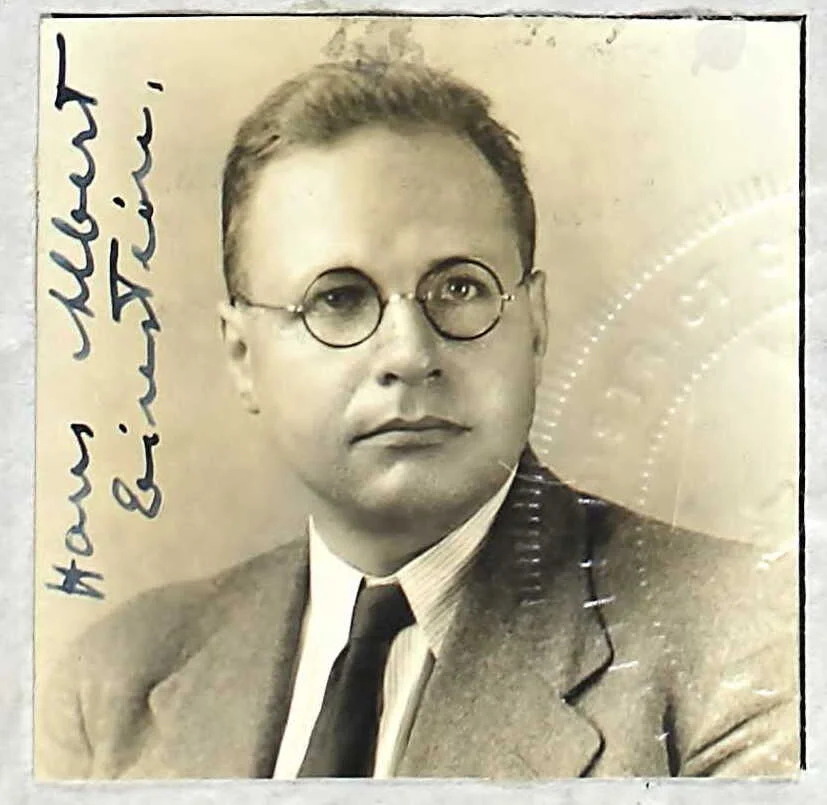
But in 1958, she left her family once more and returned to Stanford University, where she was offered a faculty position at the medical school. Here she reconnected with old friends … including with a gentleman she had met years before at CalTech, Hans Albert Einstein.
Hans Albert was the son of world famous physicist Albert Einstein, who, in 1959 was at the peak of his career. Hans Albert taught hydraulic engineering at UC Berkeley––he was a scientist in his own right.
Hans Albert’s wife, Frieda, had recently passed away. And Hans Albert and Elizabeth’s friendship was rekindled. A short romance followed, then a wedding in June of 1959. Elizabeth was 55 years old.
As for marrying the son of the world’s most famous scientist, Harriet Freidenreich doesn’t believe that Elizabeth’s career––which was well underway––benefited whatsoever.
Harriet Freidenberg: Hans Einstein is Einstein’s son, and not Einstein.
Marcy Thompson: The fall after her marriage to Hans Albert, Elizabeth began a new job at University of California San Francisco teaching neurochemistry and researching the nerve-covering sheath––or myelin––and how it broke down. This was work that she had started at Georgetown. It was a key characteristic of multiple sclerosis and it was still misunderstood.
Dr. Hauser, the neurologist we heard from just a few moments ago, actually overlapped with Elizabeth early in his career. Although he admits, he should have paid closer attention.
Dr. Stephen Hauser: I remembered Elizabeth Einstein very vaguely in my distant reaches of my memory, but it really made no impact on me. And then going back and reading about her remarkable transformative contributions, I began to wonder how could I have had this, this hole in my understanding.
Marcy Thompson: One thing is clear: it was a time when scientists were struggling to find answers for MS.
Dr. Stephen Hauser: At the time, we had no treatments for multiple sclerosis and even a pessimism that treatments could be possible. We were advised by senior mentors not to even try, that we would ruin our careers. At that time, the outlook for patients was pretty dismal. 15 to 16 years after onset on average, patients became wheelchair dependent.
Marcy Thompson: A therapeutic treatment of any kind would require an ambitious approach, and a lot more research into the brand new field of neurochemistry.
Dr. Stephen Hauser: Neurochemistry is the study of all of the chemicals in the nervous system, but particularly for immunologists, the chemistry of myelin.
Marcy Thompson: So what is myelin and what does it do?
Dr. Stephen Hauser: Imagine in the small areas of our nervous system, 84 billion cells, each connecting with thousands of others, some traversing these long areas across our brain, crossing over down to the spinal cord, and reaching its appropriate target.
Marcy Thompson: Throughout those long stretches, each one of those nerve cells has an axon that helps it transmit electrical impulses. The information responsible for carrying out the body’s basic functions travels along these nerve fibers, which can be vulnerable.
Dr. Stephen Hauser: Much like an electrical wire that needs a sheath in order to protect it from short circuiting.
Marcy Thompson: That nerve fiber needs to be insulated in order to work.
Dr. Stephen Hauser: And that insulation is a fatty and protein-rich tissue called myelin.
Marcy Thompson: Elizabeth was fixated on how this breakdown of myelin leads to autoimmunity, where the body's defense system turns against itself.
Dr. Stephen Hauser: And in multiple sclerosis, that's exactly what happens.
Dr. Riley Bove: When the immune system is activated against myelin, um, the immune cells go from the blood, cross the blood brain barrier, go into the central nervous system, and cause demyelinating injury.
Marcy Thompson: This is Riley Bove, a neurologist and Associate Professor of Neurology at the University of California San Francisco.
Dr. Riley Bove: When someone experiences demyelinating injury, individuals will experience different neurological symptoms.
Marcy Thompson: Elizabeth and her collaborator, Dr. Marian Kies, got to work. They focused on one particular structural protein found within myelin. It acts as a signaling molecule.
Dr. Stephen Hauser: It was subsequently named as myelin basic protein
Marcy Thompson: The discovery of this protein revealed something groundbreaking––the demyelination, or breakdown, of that protective sheath is behind multiple sclerosis.
Dr. Stephen Hauser: The importance here is, is profound and showed that there was something in the immune response that not only caused the disease but could protect the disease.
Marcy Thompson: In other words, demyelination is essentially an autoimmune issue. This opened up a new world of research on MS.
Dr. Riley Bove: Her ability to purify and characterize myelin basic protein was really sort of pinpointing one of the first myelin proteins that came to the attention of neuroscientists. And that just engendered a whole body of work around discovery in MS.
Dr. Stephen Hauser: This led directly to the first therapeutic for multiple sclerosis, a treatment called glatiramer acetate or Copaxone in the early 1990s.
Marcy Thompson: And, her work set the stage for modern molecular immunology investigations across many diseases.
Dr. Stephen Hauser: And really that was in many respects, the beginning of an understanding of regulation and regulatory cells by the immune system.
Marcy Thompson: And yet, this seminal contribution has been overlooked. Even by the very university where this research took place.
Dr. Stephen Hauser: Her core work was done at UCSF.
Marcy Thompson: Which is where Dr. Hauser works.
Dr. Stephen Hauser: This series of investigations should be a giant source of pride for whatever institution housed the discovery. How I could not have known of her work and existence is embarrassing to me personally.
Marcy Thompson: But for many of our lost women scientists, this is a familiar refrain. They were rarities: dedicated to their work, but not as dedicated to making sure they received credit for their work. And Marian Kies, Elizabeth’s collaborator, often receives the attention that Elizabeth does not.
Dr. Stephen Hauser: Reading her papers, what stands out is the credit that she gives to others. Her understated conclusions with profoundly important data. Why was Marian Kies, who was a fantastic person, so much more recognized than Elizabeth Einstein? And yet their contributions were similar and arguably Elizabeth’s were greater.
Marcy Thompson: Elizabeth’s contributions to the field of neuroscience got the attention of one of the most famous scientists at the time––after her father in law, that is––Jonas Salk. The virologist who invented the first polio vaccine. They began a long correspondence in 1965. And Elizabeth provided Dr. Salk with data for a clinical trial he carried out on tolerizing patients to Myelin Basic Protein.
Dr. Stephen Hauser: Why was that not more well known?
Marcy Thompson: Perhaps it was because the results were problematic. Nothing was ever formally published, and Elizabeth’s role in the research remained behind the scenes.
Dr. Stephen Hauser: These experiments could have gone on much more quickly and productively for the world of science had she been more closely involved.
Marcy Thompson: Elizabeth's work continued––and she and Hans Albert spent years traveling together, and enjoying the garden of their modest home in Berkeley, California. She had found a sense of peace that she had never known during her life. She had spent years on the move, always looking for a better opportunity, always on the verge of the unknown.
But in 1973, Hans Albert died suddenly, while they were on a sailing trip in Woods Hole, Massachusetts. They had only been married 14 years. Elizabeth was devastated. She was alone once again.
Elizabeth spent the last last act of her teaching career at the University of California Berkeley; dedicated as ever to her students and her research. And in the early 1980s, as a way to recognize her accomplishments, the university began the process of establishing a fellowship in Elizabeth's name.
Diana Coleman: This was 1981 when I met her.
Marcy Thompson: This is Diana Coleman. Her job at UC Berkeley was to fundraise on the fellowship's behalf, and she got to know Elizabeth during this time.
Diana Coleman: She was unusual, I would say so. Her background was incredible. Her academic and research background in neurochemistry was astounding.
Marcy Thompson: And although Elizabeth was initially serious and intimidating, Diana soon learned she had a sense of humor and was quite approachable.
Diana Coleman: In a strong way, she was leading a legacy on the campus for future neuro chemists and researchers and professors.
Marcy Thompson: In June, 1982, a reception was held at the Men's Faculty Club, of all places, announcing the fellowship. Gathered there were 75 esteemed colleagues––a roster of formidable scientists from Berkeley and beyond––who came together for the afternoon to sing Elizabeth's praises. They called her a pioneer, a brilliant and determined scientist, and an excellent human being.
From notes compiled by the department, we can see that Elizabeth’s remarks were brief and modest. She described how things in life turn in a circle, thanking many of the colleagues who helped her along the way with funding, laboratory space, and equipment. And the circle would continue, now, by passing funding along to students who would receive this fellowship––which, in fact, they still do.
Elizabeth concluded her remarks by citing a line from an epic Hungarian poem called "The Tragedy of Man." She quoted, "Ah, the end, if I could that forget." Then she went on, "Your honoring me today gives me the precious feeling that I made a small mark in the ever-expanding neurosciences. And because of this––although the circle closes––I do wish to remember the end."
Elizabeth’s end would not come for another eight years––she died in 1995 at the age of 90.
But that day in 1982, at the Men’s Faculty Club, the end was much on her mind.
42 years after stepping off that boat in an unknown country, the challenges of her early life were still apparent, even as she looked back on a long and successful career.
And although some might view her success as luck––as being in the right place at the right time––she chose to look at her circumstances differently: as something as deliberate as a circle. Not as something that happened by chance, but as something that was meant to be.
This episode was produced by me, Marcy Thompson, and edited by Ariel Plotnick. Natalia Sánchez Loayza is our Senior Managing Producer. Our music was composed by Lizzy Younan. Hansdale Hsu was our sound engineer. We had fact checking help from Danya Abdel Hameid.
Thanks to our co-executive producers, Amy Scharf and Katie Hafner; to Eowyn Burtner, our program manager, and marketing director Lily Whear. As well as to former Senior Managing Producer, Deborah Unger.
Also thanks to Elizabeth Block for production help on this episode.
A special thanks to the United States Holocaust Memorial Museum Archives and the Raoul Wallenberg Project Archive Collection for use of the Otto Roboz interview.
We're distributed by PRX. Our publishing partner is Scientific American. Our funding comes in part from the Alfred P. Sloan Foundation and the Anne Wojcicki Foundation, and our generous individual donors.
Please visit us at lostwomenofscience.org, and don't forget to click on that all-important donate button. See you next time!
Listen to the Next Episode in this Series
More Episodes
Listen to the complete collection of episodes in this series.