October 5, 2026
Svetlana Mojsov: Hidden GLP-1 Pioneer Turned Nobel Prize Winner


October 5, 2026
Svetlana Mojsov: Hidden GLP-1 Pioneer Turned Nobel Prize Winner
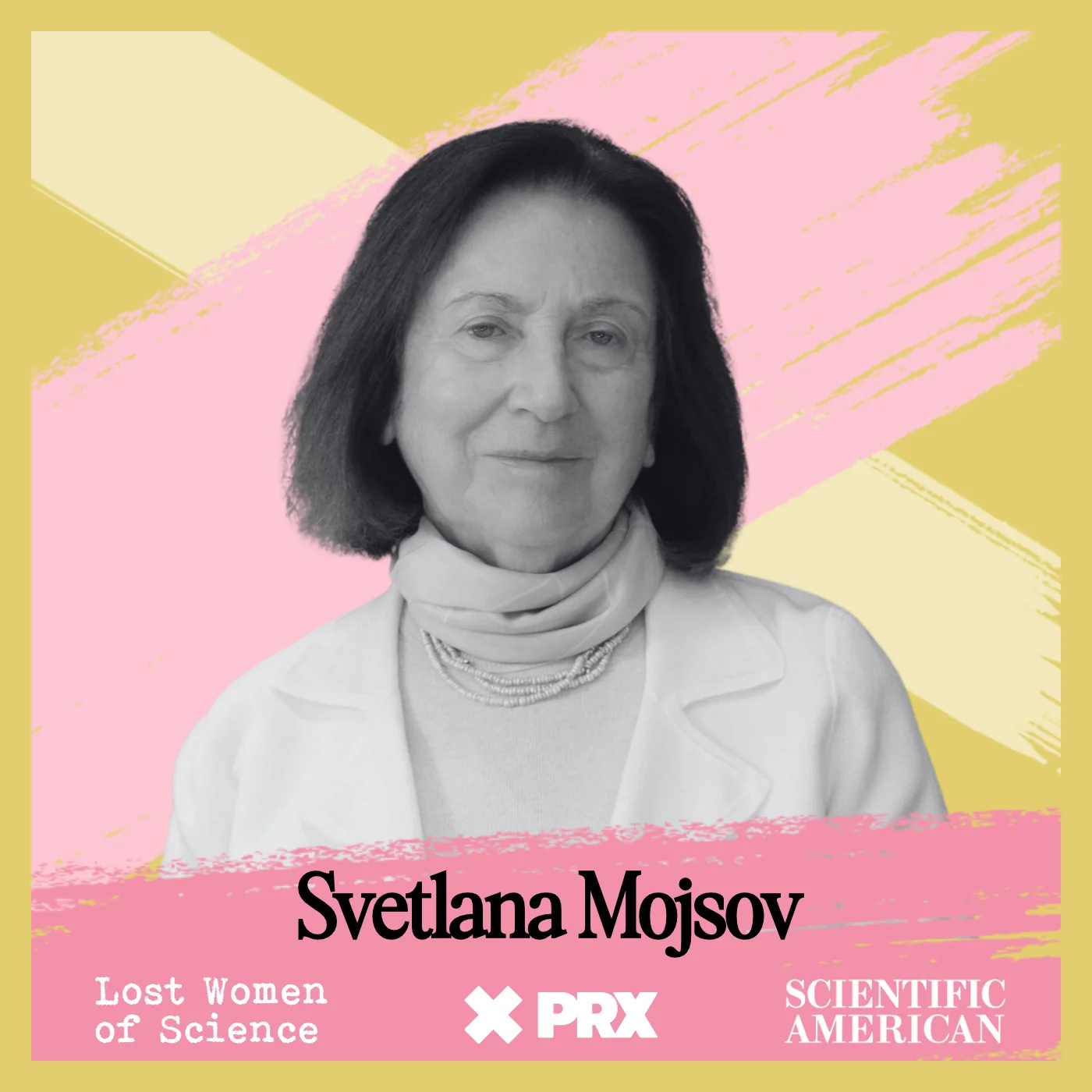
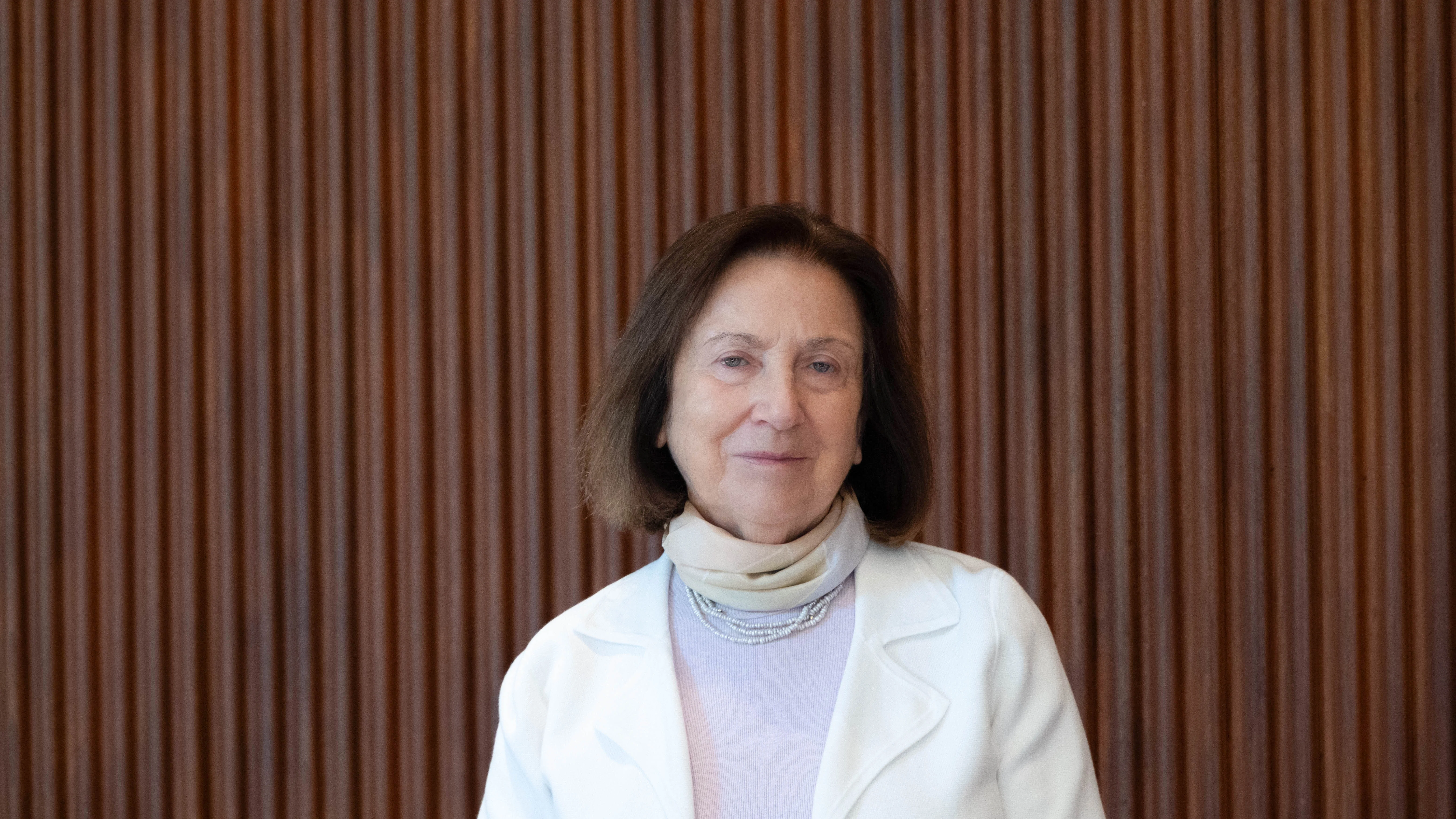
Svetlana Mojsov just won a Nobel Prize for her contribution to the discovery of GLP-1. But the recognition was a long time coming. Dr. Mojsov fought for years to bring her name out from the shadows of three men who were getting all the attention.
Episode Description
In 1983, working with pencil and paper at Harvard-affiliated Massachusetts General Hospital, Svetlana Mojsov spotted what everyone else had missed: the active form of a newly discovered hormone called GLP-1. After three years of testing, she proved she was right. That molecule is the basis of blockbuster drugs like Ozempic and Wegovy. Despite her valuable contributions to endocrinology and peptide research, Dr. Mojsov’s name was reduced to a footnote in most of the stories about GLP-1’s discovery. Instead, the credit was given to the men around her. This year, she finally received the highest recognition a scientist can receive: the Nobel Prize. In this episode, we’ll explore how she got there after years of legal battles and hardships.

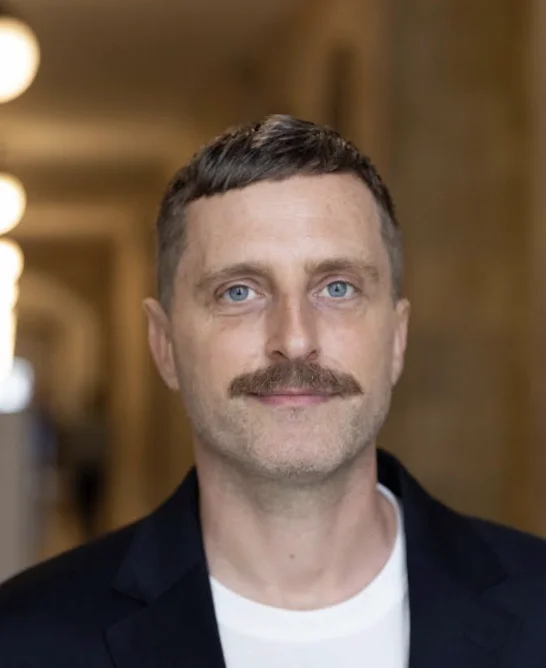
Luke Malone is an Emmy-nominated journalist and producer whose work has appeared in outlets including The New York Times, HBO, The Washington Post, TIME, This American Life, and The Atlantic. He is co-author of One in Five, a narrative nonfiction book about child sexual abuse prevention. He also publishes academic research, has consulted on NIH-funded research projects, and is Director of Strategic Communications and Research Translation at the Center for Violence Prevention Research. He specializes in translating complex social and policy issues—particularly around violence prevention—into clear, emotionally resonant storytelling that deepens public understanding.
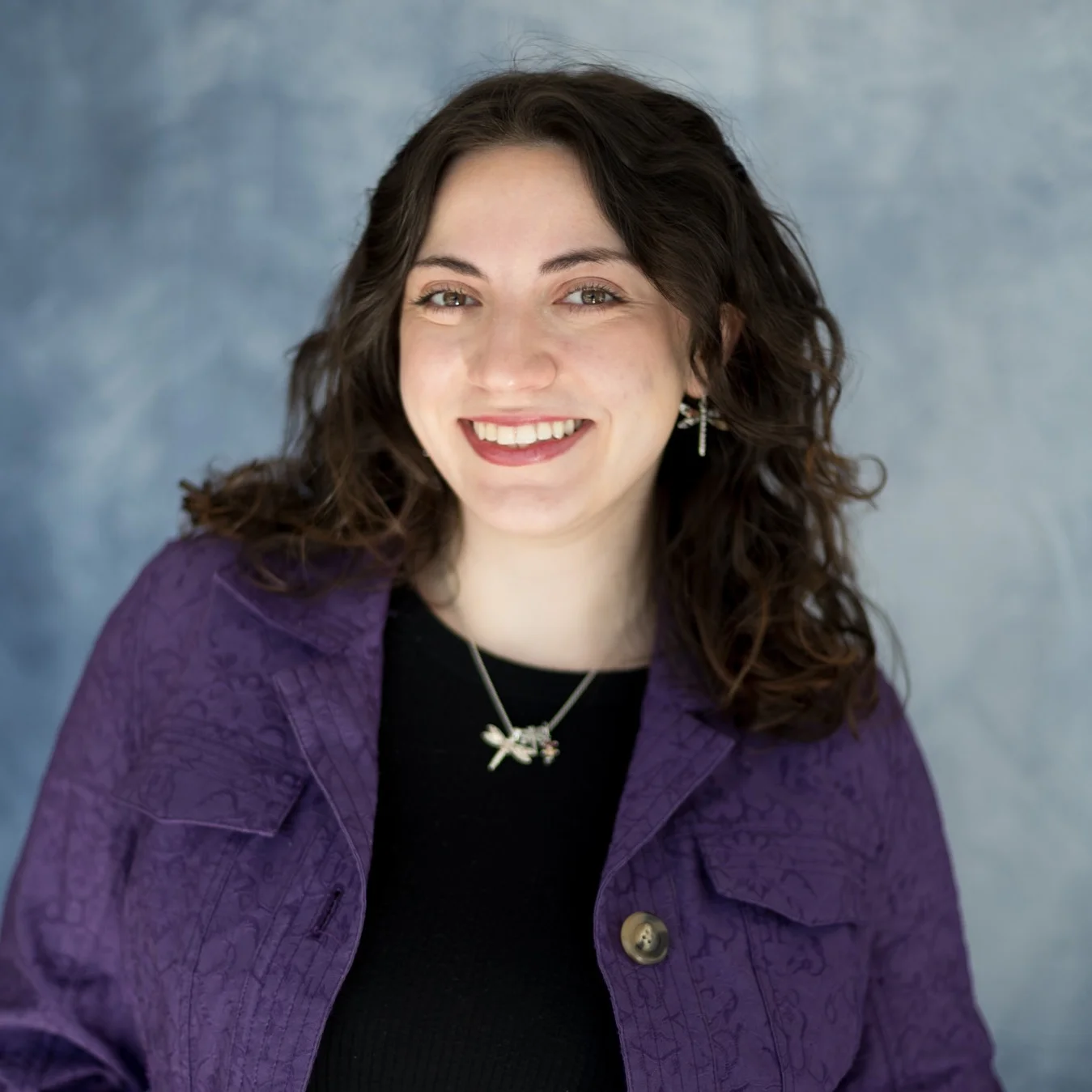
Elizabeth Corallo is a producer and journalist whose work has appeared in Forbes, CNN, TV Guide Magazine, TV Insider, Swooon, The Observer at Fordham Lincoln Center, and The Ram at Fordham Rose Hill. Her stories have featured everything from food allergy awareness to poetry to breaking news, and she can be best described as a ‘Jill-of-all-trades’ when it comes to producing media. She’s a recent graduate from Fordham University, Lincoln Center, where she studied Journalism and Film/TV.

Katie is co-founder and co-executive producer of The Lost Women of Science Initiative. She is the author of six non-fiction books and one novel, and was a longtime reporter for The New York Times. She is at work on her second novel.
Luke Malone is an Emmy-nominated journalist and producer whose work has appeared in outlets including The New York Times, HBO, The Washington Post, TIME, This American Life, and The Atlantic. He is co-author of One in Five, a narrative nonfiction book about child sexual abuse prevention. He also publishes academic research, has consulted on NIH-funded research projects, and is Director of Strategic Communications and Research Translation at the Center for Violence Prevention Research. He specializes in translating complex social and policy issues—particularly around violence prevention—into clear, emotionally resonant storytelling that deepens public understanding.
Elizabeth Corallo is a producer and journalist whose work has appeared in Forbes, CNN, TV Guide Magazine, TV Insider, Swooon, The Observer at Fordham Lincoln Center, and The Ram at Fordham Rose Hill. Her stories have featured everything from food allergy awareness to poetry to breaking news, and she can be best described as a ‘Jill-of-all-trades’ when it comes to producing media. She’s a recent graduate from Fordham University, Lincoln Center, where she studied Journalism and Film/TV.
Katie is co-founder and co-executive producer of The Lost Women of Science Initiative. She is the author of six non-fiction books and one novel, and was a longtime reporter for The New York Times. She is at work on her second novel.
Dr. Barany is an eminent peptide scientist who entered The Rockefeller University graduate program directly from Stuyvesant High School in New York at age 16. He shared an office with Svetlana Mojsov - the two have been great friends and colleagues for over half a century. Dr. Barany is currently a professor emeritus in the Department of Chemistry at the University of Minnesota Twin Cities. He is also an extraordinary crossword puzzle constructor.
Jens Juul Holst is Professor of Medical Physiology at the Department of Biomedical Sciences, University of Copenhagen. He is also Senior Group Leader at the Novo Nordisk Foundation Center for Basic Metabolic Research, University of Copenhagen. Professor Holst's scientific work has focused on the regulatory peptides of the pancreas and the gut and their importance in the regulation of the functions of the GI-tract and metabolism, with particular focus on blood glucose and appetite regulation, obesity, and diabetes. Professor Holst’s great scientific achievements include the discovery of GLP-1 (glucagon-like peptide 1), a gut hormone regulating insulin secretion, appetite and food intake, and his subsequent both basic and translational research in this field.
Dr. DiMarchi is a distinguished professor and the Linda & Jack Gill Chair in Biomolecular Science at Indiana University Bloomington. He is also a member of the National Academy of Medicine and the National Inventors Hall of Fame, and a former Group Vice President at Eli Lilly; Novo Nordisk. His academic research focused on glucagon physiology and the discovery of single molecule multimode agonists to treat obesity and diabetes.
Two science journalists from STAT, a news outlet focusing on health and medicine. The two wrote about Dr. Svetlana Mojsov in 2023. In addition to being featured on this episode, Elaine provided audio clips from her interviews with Svetlana in 2023.


Further Reading:
Episode Transcript
Svetlana Mojsov: Hidden GLP-1 Pioneer Turned Nobel Prize Winner
<A phone rings. Once. Twice. It slowly fades against the sound of morning traffic.>
Katie Hafner: Very, very early this morning — Monday, October 5th, 2026 — a phone rang. The call was coming from Sweden. Specifically, the Karolinska Institute. Also known as the home of the Nobel Prize. The woman who picked up that call received some major news: she has been awarded this year’s Nobel Prize in Physiology or Medicine for her foundational work in discovering the active form of glucagon-like peptide-1, or GLP-1. GLP-1 is the molecular basis of blockbuster medications known for regulating blood sugar and promoting weight loss — medications like Ozempic and Wegovy.
Her name is Svetlana Mojsov. And what makes this announcement especially momentous is that up until a few years ago, Svetlana Mojsov was completely unknown. For decades, hers was a name reduced to an asterisk in the story of one of the most important medical discoveries in the last century.
But as of this morning, that has all changed.
Katie Hafner: I'm Katie Hafner, and this is Lost Women of Science. Normally on this program, we talk about women — usually women who are long since deceased — who’ve been lost to history: scientists whose work has defined our world but whose names have been relegated to a footnote, if they appear at all.
This episode is different. For the first time on our show, we are introducing you to a scientist who, for one thing, is very much still alive, and spent 30 years fighting her erasure — and just this morning was awarded the world’s most prestigious prize. A woman who is about as un-lost as one can possibly be.
But this episode is about far more than the Nobel Prize. It's about how we assign credit in science. And, sometimes, how little the assigning of credit has to do with the actual science. We have papers, and patents, and lab notebooks, seemingly incontrovertible evidence of authorship. And yet what actually determines who gets recognized, who gets remembered, can have more to do with storytelling. And who is telling the story, and how well that story is told. And the person at the center of this story is Svetlana Mojsov.
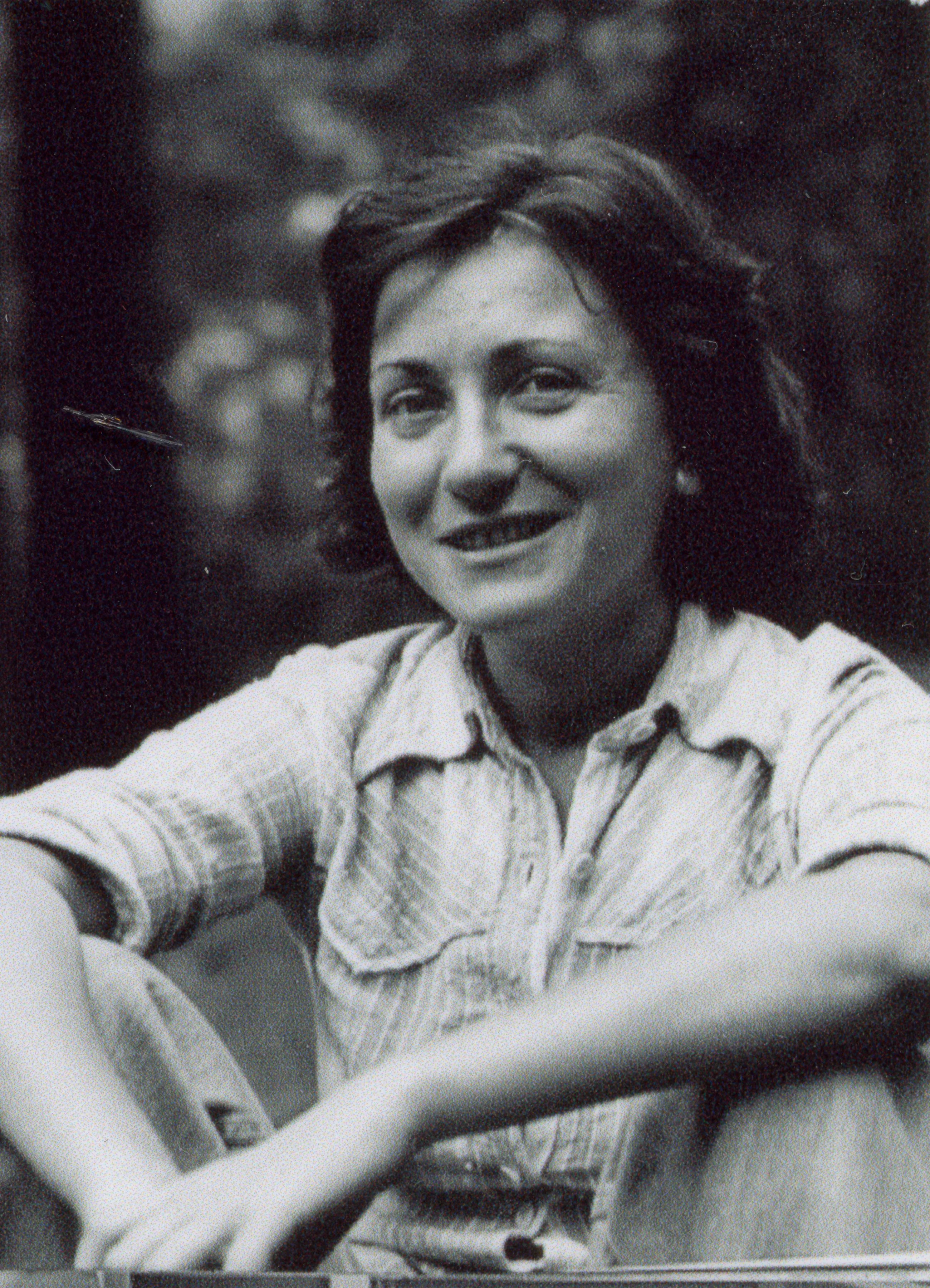
Katie Hafner: Svetlana Mojsov was born in Skopje, which was then part of Yugoslavia and is now the capital of North Macedonia. As a young girl, she became interested in the butterflies and insects that she found in a park near her family’s home. Every spring and summer, she observed their behavior and, eventually, she began cataloging them.
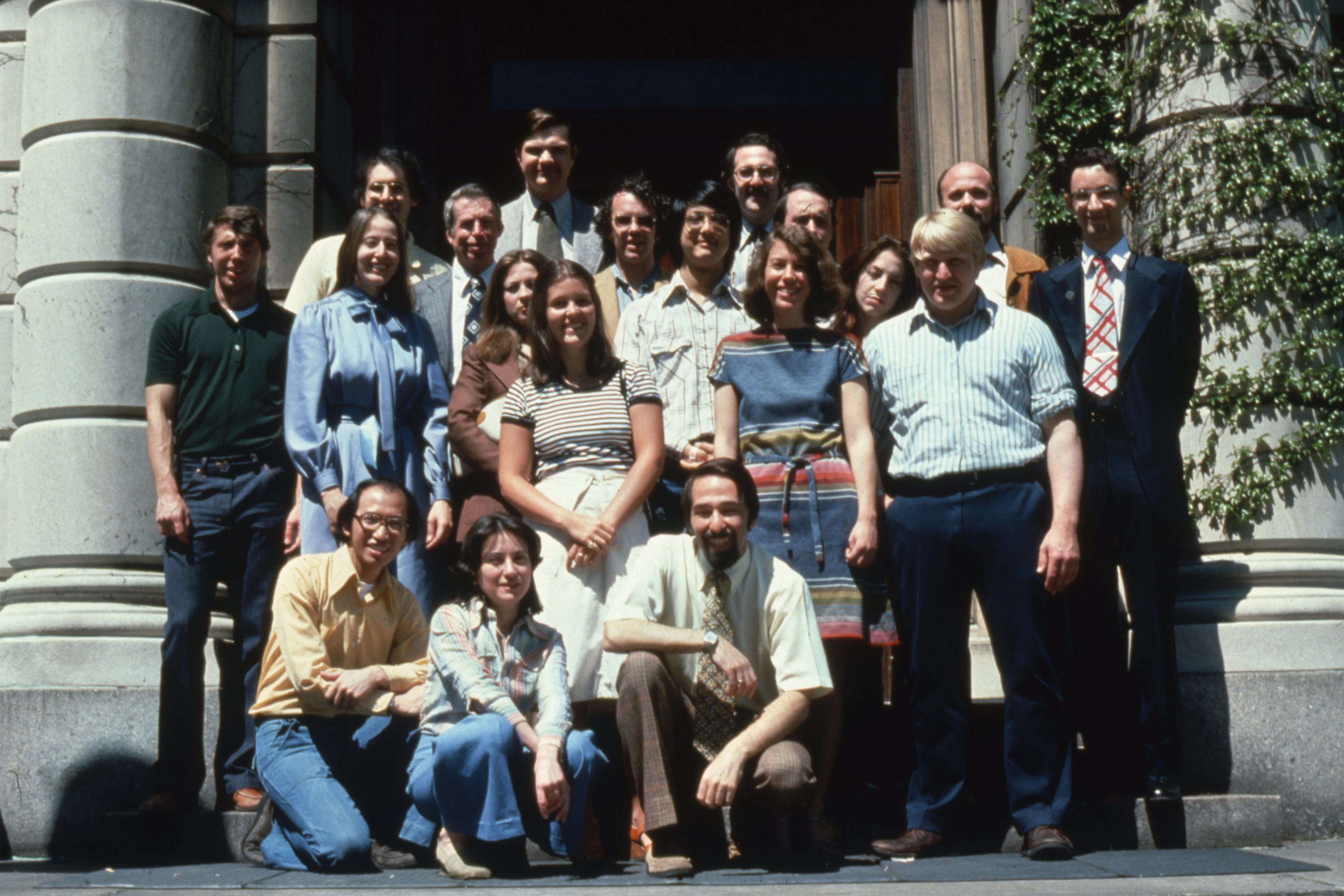
Svetlana’s early interest in science continued. She completed her undergraduate degree in physical chemistry at the University of Belgrade, which is now the capital of Serbia. Then, in 1972, at the age of 24, she moved to New York City to join the lab of Bruce Merrifield, a renowned biochemist at the prestigious Rockefeller University.
George Barany: Rockefeller calls itself the Nobel Farm. You can look up the statistics: how many people at Rockefeller, through its history, have gotten the Nobel Prize. Everybody who was a professor at Rockefeller visualized themselves as a future Nobel laureate.
Katie Hafner: That’s George Barany. Today, he’s an emeritus professor of chemistry at the University of Minnesota, and in 1972, he was another of Bruce Merrifield’s graduate students, and George and Svetlana shared an office. Their friendship was immediate and deep.
George Barany: We had many things in common, scientifically. Also culturally — we both liked art and opera, ballet.
Katie Hafner: George was also privy to the courtship between his officemate and a fellow grad student named Michel Nussenzweig, who would go on to become Svetlana’s husband and a world-renowned immunologist.
George Barany: There'd be a knock on the door, and there would be Michel, telling, "Oh, Svetlana, George is working you too hard. How about having some tea?" And that's where the romance blossomed.
Katie Hafner: George and Svetlana shared that office for the better part of a decade, and George saw first-hand the progression of Svetlana’s work. He also saw her early promise. Their boss, Merrifield, had invented a faster way to build peptides.
Peptides, by the way, are short chains of amino acids — basically like smaller versions of proteins. He called it solid-phase peptide synthesis and it would eventually win him his own Nobel in 1984. But in the mid-1970s, solid-phase peptide synthesis still had its skeptics. Merrifield was looking for a dramatic example to prove them wrong. And Svetlana proposed one: glucagon, a hormone that raises blood sugar. If she could make it using Merrifield’s technique, it would be the proof her boss was looking for.
George Barany: The conventional wisdom was that glucagon was difficult to make, essentially impossible. You could make glucagon by brute force, with highly trained teams of twenty scientists working for multiple years. But to have one person working at the bench with this solid phase technique: they said it couldn't be done.
Katie Hafner: That is, until Svetlana took it on in 1975.
George Barany: Svetlana says, "I'd like to try." And Merrifield said, "Can't be done — you're probably gonna fail." Svetlana said, "No, I want to try." He said, "Okay, you have my blessing."
Katie Hafner: This is telling. In science, an idea is only as good as your ability to test it — which means bench time, equipment, funding… all of it controlled by your boss. Without that backing, a novel idea is just that: an idea. So Merrifield's blessing, hedged as it was, mattered enormously. And it shows just how much faith he had in Mojsov. Which was just as well:
George Barany: Mojsov made glucagon as one person working in the Merrifield lab, and she had to modify the traditional Merrifield method to get it to work. That was an extraordinary tour de force experimentally, and she still did that as a graduate student.
Katie Hafner: Svetlana’s grit was also apparent to Richard DiMarchi, who was also one of Merrifield’s post-docs. He overlapped with Svetlana for two years. Richard would go on to spend a combined twenty-six years at Eli Lilly and Novo Nordisk, where he contributed to the discovery and development of multiple endocrine drugs that we know today — including Humulin, Humalog, and Forteo.
DiMarchi remembers what Svetlana was like back at Rockefeller.
Richard DiMarchi: She just had an identity that showed that she was confident in what she was about, despite the complexities of what she was trying to achieve.
Katie Hafner: That confidence has a lot to do with how Svetlana was raised. In Yugoslavia, where she grew up, she was taught that she was just as capable as anyone else, in any room, at any given time.
Svetlana Mojsov: I never viewed myself as a woman being in a field dominated by men, because I had this ingrained in my mind that it doesn't matter that I am a woman, that I can do that.
Katie Hafner: That was Svetlana speaking with STAT News in 2023. That typing you might hear is the journalist taking notes.
By joining Merrifield's lab, Svetlana found herself among the most promising future scientists in her field.
Richard DiMarchi: I mean, there was just a collection of people that have constituted kind of a who's who in peptide sciences for the last three or four decades.
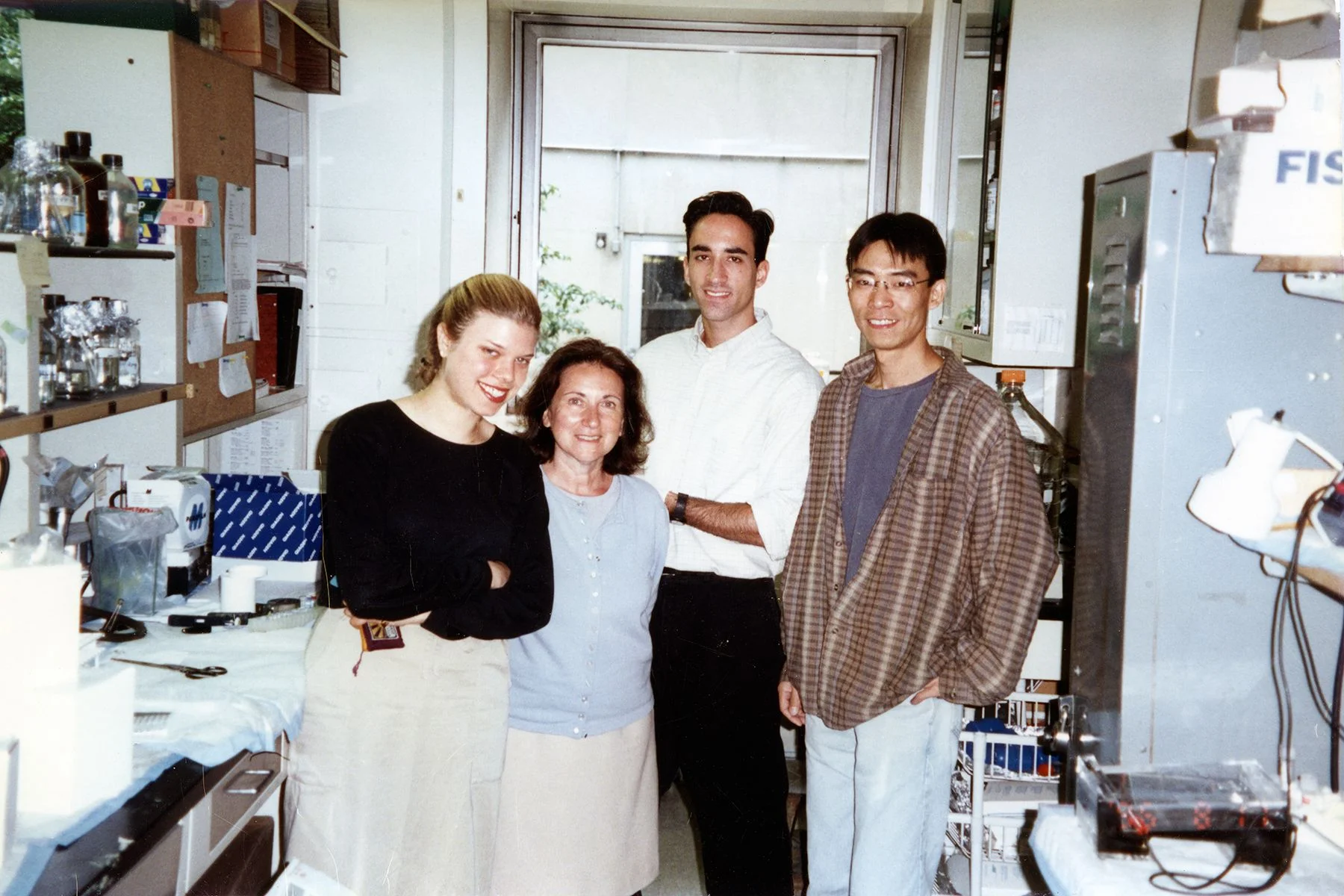
Katie Hafner: After a decade honing her technique in Merrifield's lab at Rockefeller, Svetlana was recruited into the endocrine unit at Massachusetts General Hospital — a Harvard teaching hospital — where she also held the title of instructor at the Medical School. Two floors below her new office sat the laboratory of molecular endocrinology. It was run by Joel Habener, a prominent endocrinologist. In 1982, Habener's team had found an intriguing stretch of genetic material in a fish gene. A year later, a geneticist named Graeme Bell and his colleagues sequenced the mammalian versions — including the human version — and gave them a name: glucagon-like peptide-1, AKA GLP-1.
But the full sequence wasn't biologically active. It had to be cut down before it could do anything in the body. Cut it wrong, and it’s nothing more than an inactive protein. Graeme Bell hypothesized where to cut it, and well… he got it partially right. Bell’s theory was that the active form of GLP-1 in the body consisted of a sequence of 37 amino acids. But there was a second cut he didn't see. And neither did anyone else. Except Mojsov.
Here she is discussing her discovery:
Svetlana Mojsov: Here I made a critical contribution to identifying the active sequence of GLP-1. It was the same sequence which is now integrated in all the treatments for diabetes and obesity, and yet it seemed that people were not aware of it.
Katie Hafner: That is the moment this entire story turns on — the moment when the full potential of GLP-1 was unlocked. In 1983, Svetlana had spotted the active form. She looked at Graeme Bell’s 37 amino acid sequence and saw something no one else saw: a break point between amino acids six and seven. A place she believed the body would snip the chain and release something shorter and actually powerful: GLP-1, seven-to-thirty-seven. Her long-time friend George Barany explains:
George Barany: She noticed that if you looked at the position between six and seven, you could cut that. Everybody else missed that. She hypothesized that this would be the active species and she did this all with pencil and paper.
Katie Hafner: Glucagon and GLP-1 come from the same gene — GLP-1 is essentially glucagon's genetic sibling. Which is why scientists expected it to work in a similar way. Both are peptide hormones, chains of amino acids, and often that chain only works once part of it gets trimmed away. Svetlana already knew this from her work with glucagon: remove even one amino acid from the wrong spot, and the hormone is biologically inactive.
When she compared Bell's GLP-1 sequence to glucagon's, she noticed something: the two only really lined up starting seven amino acids in. Since she knew that stretch was exactly what made glucagon active, the overlap told her where GLP-1's active part had to be, and she began looking for a reason why the body would cut it there.
Svetlana Mojsov: When I saw this sequence, it's a shock. I was so familiar with the glucagon sequence. I knew immediately that the sequence homology of glucagon will start at position seven.
Katie Hafner: Sequence homology refers to how two chains resemble each other. If you line GLP-1 and glucagon up side by side, you'll see that many of the same amino acids sit in the same spots. And that resemblance kicks in at position seven. And one amino acid before that, at position six, she found what she was looking for.
Svetlana Mojsov: And I also noticed that before that histidine, there is an arginine amino acid, which is typically cleaved by enzymes.
Katie Hafner: Histidine and arginine are both amino acids, two links in the chain. Histidine sits at position seven, where the resemblance starts. Arginine sits right before it, at six. And arginine matters because the body's enzymes look for it as a place to snip a long chain into working pieces. Finding one right there gave her a crucial piece of information: this is where the body actually makes the cut.
Svetlana Mojsov: That's where I predicted it's going to start at histidine, and it's going to be the biologically active peptide.
Katie Hafner: She explains how she worked it all out on paper, correcting herself as she went.
Svetlana Mojsov: And if you go all the way to the end, you can see how I made a mistake. I put the arrow next to the two arginine amino acids, which I knew had to be cleaved, and then I moved it back.
Katie Hafner: Cut there, and Bell's original sequence loses its first six amino acids. 37 amino acids become 31. She labeled that shorter piece GLP-1, seven-to-thirty-seven.
Svetlana Mojsov: I realized immediately this was going to be a biologically active peptide.
Katie Hafner: This was an immense discovery. But hypothesizing something on paper and proving it inside a living body are two very different things. So Mojsov got to work: she synthesized her own peptide, injected it into rabbits, and waited two months for their immune systems to produce antibodies she could harvest from their blood — a part of the work she has said she disliked. The blood had to be drawn directly from the rabbits’ neck arteries, and Svetlana would go home right after and take a shower. Later, she'd mix those antibodies with tissue from rat intestines, to see if they'd latch onto her hidden fragment — proof it existed in the body, not just on paper. If it were me, I’d take showers after those experiments too.
In 1986, after three years of testing, and many rabbits and rats later, Mojsov believed she had proven it: GLP-1 seven-to-thirty-seven actually existed in the gut. She published the finding in the Journal of Biological Chemistry, where she was listed as first author — meaning she was the one leading the actual research. Joel Habener was named as last, senior author… Svetlana agreed to this, not realizing the consequences.
That solved half the puzzle. Now came the critical next step: could GLP-1 actually trigger the release of insulin?
Joel Habener introduced Mojsov to Gordon Weir, a diabetes researcher whose lab had solved a hard technical problem: how to keep a rat pancreas functioning outside the animal's body long enough to track, continuously, exactly how much insulin it released. This involved keeping the pancreas in a plexiglass box and feeding it a warm, oxygenated fluid in place of blood. But proving GLP-1 seven-to-thirty-seven actually triggered insulin release depended on tools Mojsov had: the peptide she'd synthesized herself and her earlier assays, the lab tests she developed to detect and measure GLP-1 in the body. She went into Weir's lab and worked side-by-side with his technician to run the experiments.
George Barany: Svetlana was the one in the lab rolling up her sleeves — taking the blood samples, doing the injections. It was a really, really amazing piece of work.
Katie Hafner: When they injected Mojsov's GLP-1 seven-to-thirty-seven into that pancreas, insulin came pouring out.
Svetlana Mojsov: Gordon Weir called me on the phone and he said, "You won't believe it, how active it is."
Katie Hafner: Mojsov and Weir’s technician then began shrinking the dose of Mojsov’s fragment, to see if the effect disappeared. It didn’t, even at doses a million times smaller than a typical lab test — concentrations matching what the gut actually releases after a meal. That meant this wasn't just a chemical that could trigger insulin in a lab. It was something the body was already doing, every time it ate: the basic mechanism that the first generation of GLP-1 diabetes drugs would be built on.
The 1986 and 1987 papers are two of the foundational papers we can point to in order to show how a mystery gut hormone became the basis of a drug that would create a market in the billions — a market projected to grow to $200 billion by the end of this decade. But this is where Svetlana’s story takes a turn. And not for the better.
George Barany: There was a narrative that was being pushed that Habener was a genius, who thought of all this stuff, and had a couple of people under his direction.
Katie Hafner: In 1986, Mojsov’s work caught the attention of folks at the Massachusetts General Hospital’s patent office. Word had reached them that there was something potentially valuable being developed in Habener's endocrinology lab: a compound called GLP-1. They invited Svetlana a couple of times to talk about her work — once in 1986, and again in 1988. She sat down with them and walked them through her own notebooks — the actual record, in her own hand, of what she'd found and when she'd found it. Both times, as far as she knew, nothing came of it. No follow-up. No patent filing. No explanation.
In 1990, Mass General's lawyers did eventually end up filing two patents covering the use of GLP-1 to trigger insulin release. They were granted in 1992. The same idea Svetlana had laid out for the patent office, twice. Except her name wasn’t on either patent. Joel Habener’s was.
A year after the patents were granted, Svetlana ran into Habener at a conference in Copenhagen, and — completely unaware of what had happened — asked him if he ever heard back about the patent.
Svetlana Mojsov: I remember clearly asking Joel, "What's happening with the patent?" Joel turned around and left.
Katie Hafner: It would be another three years before Mojsov would learn that the two patents had been granted, with Habener listed as sole inventor.
Until that point, Svetlana didn’t know that she was actively being scrubbed from the story of GLP-1. On her way to becoming yet another lost woman of science. Finding the active form of GLP-1 had been difficult, but now Svetlana would have to prove something much harder: that she was the one who found it.
More on that after the break.
*******
Katie Hafner: When Svetlana Mojsov found out about the two GLP-1 patents filed without her name, she was shocked —
Svetlana Mojsov: I was really totally taken aback. It was incredible to me.
Katie Hafner: How could they leave her off? Was it intentional? Or was it an oversight? Joel Habener did have a real claim: his lab was the first to spot the precursor to GLP-1 in anglerfish. But it was Svetlana who worked out which piece of GLP-1 actually mattered, and she proved that it worked. And yet, a man was getting the sole credit for a discovery that she played a major part in.
Svetlana Mojsov: It was incredible that they could do that. It was a very difficult legal negotiation to deal with. Because if you went too far, we could invalidate the patents. We could never question what Joel Habener submitted —
Katie Hafner: Because if she started questioning that, it could end up interfering with the patents. And that was the last thing Svetlana wanted to do. By then, it had already been licensed to Novo Nordisk.
Svetlana Mojsov: And I wanted to see it come to the market. I have this deep belief that it's going to be a very good medicine which will help a lot of people, and I was very proud that I was part of it. So, I didn't want to invalidate the patents. I didn't want to stop that research. All I wanted was to give the credit for what I did.
Katie Hafner: Despite these reservations, Svetlana lawyered up and launched a ten-year legal battle against Mass General to have her name added to the patents as a co-inventor. She eventually succeeded. In 2004, two decades after she had made her initial game changing discovery, the U.S. Patent Office made the first of several corrections: Svetlana Mojsov was now listed alongside Habener as a co-inventor. As of today, her name appears on not just the original two, but all four of the patents relevant to the foundational GLP-1 discovery.
Why it took so long remains something of a mystery. Joel Habener died in 2025. When he was asked about it by a journalist two years earlier, in 2023, he said that Mass General's lawyers asked him at some point in the '90s if Mojsov deserved credit, and he told them that she did. Oddly, he didn't recall any protracted legal fight. Svetlana’s friend George Barany, however, has a different take.
George Barany: Haber benefited reputationally and financially from Mojsov’s exclusion. And then he plays dumb, "I had no idea that, uh, there were these issues." It doesn't meet the sniff test.
Katie Hafner: That's a serious charge, and it isn't one everyone we talked to for this story would sign onto. Whichever way it went down, the 2004 amendments to the two main patents put Svetlana's name on the public record as co-inventor. The issue had finally been put to rest.
Except… it hadn't.
For years, as the story of GLP-1 continued to be written, Svetlana Mojsov’s name and contribution continued to fade… even as GLP-1 was being turned into diabetes drugs like Ozempic, then weight-loss drugs like Wegovy. Blockbuster medications that would change the medical and cultural landscape.
In a review they wrote explaining their work after winning the 2017 Harrington Prize for Innovation in Medicine, the trio of Joel Habener, endocrinologist Daniel Drucker, and physiologist Jens Juul Holst described her as "Svetlana Mojsov in the Habener laboratory," as if she was just there, working for him. But let’s be clear, she did not work for him. In 2021, when the same trio won the Canada Gairdner International Award, the journal Cell published a piece that referred to Mojsov as a postdoctoral fellow in the Habener Laboratory. She was, in fact, Director of the Peptide Synthesis Core Facility.
Here’s what she had to say in an interview with STAT News about that conspicuous effort to downplay her.
Svetlana Mojsov: That manipulated information downplays my role, diminishes my role. And the best example is the Cell paper — that I was a postdoc, and then Drucker did this and all of that. And that's when I actually got upset, and I wrote a letter to the editors.
Katie Hafner: At Mojsov’s insistence, Cell issued a correction. But the familiar pattern was re-emerging: she was being left behind. The 2017 Harrington Prize was for a diabetes breakthrough. By 2021, with Wegovy just approved for weight loss, the same men were being honored for something much bigger… and Mojsov's name kept receding further from the story. Mojsov is not the only person responsible for the discovery of GLP-1, but she was certainly one of the core scientists whose work made it possible. Arguably more so than some of the men who were winning prizes for their contributions.
Svetlana Mojsov: I still don't understand how they can exclude me. I don't understand how those prizes are given. I'm actually out of the system. I clearly don't understand it.
Katie Hafner: As we were reporting this story, we got different accounts of why Svetlana faded from the popular narrative. There were no claims of outright collusion…as in, nobody sat in a room and voted to erase her. But, even today, there are those in the field who question the attention she’s receiving now.
Jens Holst: She pops up in 1986, when she walked out to Joel Habener's lab, and then she went out again in 1988. That's it.
Katie Hafner: That is Jens Juul Holst, a professor of medical physiology at the University of Copenhagen. He's talking about Svetlana’s breakthrough years — the 1986 discovery in the gut, and the pancreas experiments that proved it worked. To him, that's where her story begins and ends. At that same time, in the mid 1980s, he and his team in Copenhagen were embarking on the same discovery as Mojsov and Habener — using pigs instead of rats. Holst is a major figure in the field, and one of the three men who share those major prizes. He has a theory about all of this. Here he is speaking with our producer, Luke Malone.
Jens Holst: Obviously, the story about the patent fits into a picture of a woman being held down and suppressed by males. It was probably more because of his absentminded manners that he forgot to put anybody else but himself on the patent. But it was obviously a mistake not to include her in the patent because it's based on the work she did.
Luke Malone: It's a pretty big mistake, though.
Jens Holst: Yeah, I agree.
Katie Hafner: Holst is a hard one to pin down. On the one hand, he gives Mojsov credit for her work…
Jens Holst: I think she needs to be recognized for the two papers where she's the first author. That, I think, is fair.
Katie Hafner: And, on the other hand,…
Jens Holst: And then, she left the field. And we heard absolutely nothing of her until this happened. I think she excluded herself by not following anything up. I mean, I've published almost 1,000 papers about GLP-1. Did you know that? 1,000. 1,000 of them. So, you know, I have certainly not been lying on the couch for all these years. On the contrary, I've really worked hard to follow it up.
Katie Hafner: Ouch. Not exactly generous. Nor entirely true. The trajectory of Mojsov’s career has been different from that of Holst and some of her contemporaries, to be sure. After returning to Rockefeller in 1990, Mojsov did keep working on GLP-1 — this time studying it in fish. But over the next two decades, until around 2011, her focus shifted to immunology research and mentoring junior scientists.
There’s something else worth mentioning here. With Nobel-worthy work, which is how Mojsov’s work has been characterized in recent years, the prize honors a discovery, not a career's worth of follow-up. And it often comes decades later, long after the scientist has moved on.
Richard DiMarchi: Was this the only thing that Svetlana Mojsov has contributed? Boy, it's an awful big one.
Katie Hafner: That’s Richard DiMarchi, the chemist who worked alongside Mojsov in the Merrifield lab. We told him about Holst’s read on Svetlana’s contributions to the field and he disagrees.
Richard DiMarchi: That’s not fair. I think Svetlana has continued to make contributions to the field. Maybe they weren't as visible or as many as others. Some of that may be personality — she is a relatively quiet person. She doesn’t recruit or scream attention for herself. And quite frankly, she might have been discriminated against, being a female at that point in time, being in a chemistry world. English wasn't her first language. It was a combination of things that probably detracted from Svetlana's recognition. But that in no way lessens or diminishes the significance.
Katie Hafner: We don’t know what exact confluence of factors led to Svetlana’s erasure, but DiMarchi is certain about one thing: there is incontrovertible proof that Svetlana deserves her seat at the table. Specifically at the head of it.
Richard DiMarchi: The patent has only two names on it, Joel Habener and Svetlana Mojsov. Unlike a publication, that's a legal document. You cannot add people who are not inventors and you cannot leave anyone out who is an inventor, or you will violate the validity of the patent.
Katie Hafner: Which would be a major problem, because it was about to become the cornerstone of a market worth many, many billions.
Richard DiMarchi: It eventually was licensed by the Novo Corporation, Novo Nordisk. And I think that attests to the validity of it, 'cause surely they did their due diligence before investing in all of this. When I look at who were the cornerstones of this, Svetlana Mojsov and Joel Habener stand tall.
Katie Hafner: This is where the power of the dominant narrative comes into play. Mojsov is – now – officially listed as one of only two co-inventors on the two big patents. She was first author on two of the field’s foundational papers, which even those critical of her give her credit for. Yet, in 2023 – I repeat, as recently as 2023 – when the New York Times wrote a sweeping history of the origins of GLP-1 drugs, all of the men got a namecheck while Svetlana didn’t get so much as a mention.
The story was written by a longtime science writer for the Times. She should have known better. Svetlana told STAT that she thought that any reporter doing due diligence would have seen Svetlana’s contribution.
Svetlana Mojsov: I just thought it was all in the papers, that it was obvious. I was probably naive about it. I just don't think you have to go and advertise yourself. I have to admit, I feel very uncomfortable that I have to advertise myself now. Although this is against my personality, I have to do it, because I can't let those three men squash me.
Katie Hafner: Her friend George Barany had an even stronger reaction
George Barany: This got me really angry. I wrote a letter to the editor saying, "You, you need to correct the record." And The New York Times dug in its heels.
Katie Hafner: So, no correction.
George Barany’s frustration on behalf of his friend had already been brewing by this stage. By all accounts, Svetlana is a private person and didn’t tell anyone around her what had been happening. George found out about all of this only because of a chance encounter on a New York sidewalk in 2023.
George Barany: My brother ran into Svetlana on the street, and my brother was in a bad mood. He was complaining about an intellectual property issue of his own. This is not language that Svetlana would use, but she basically said, "hold my beer." And then she told him what she'd been through, and my brother was so appalled, he said, "I better let George know about this right away."
Katie Hafner: George knew Svetlana well enough to know that she wouldn’t advocate for herself publicly. A behind-the-scenes legal battle was one thing, but it felt unseemly to advocate for oneself in the press. He had no such qualms, and began compiling a document — aided by some of his colleagues in the field — that outlined the history of GLP-1 and Mojsov’s critical role in it.
George Barany: Somehow this came to the attention of Science magazine, and they assigned a reporter to do an article.
Katie Hafner: The Science article came out on September 8, 2023… just three weeks after the New York Times piece.
Another in-depth story about Svetlana was published in STAT News on September 27. Both of these articles would correct the record — in a big way. These two stories, which featured interviews with Svetlana Mojsov, George Barany, and all the others, focused on Svetlana's overlooked role in the discovery of GLP-1 and the decades-long fight to get her name back on the record.
Megan Molteni, one of the reporters on the STAT article, has a pretty cynical take on this whole sorry saga.
Megan Molteni: Svetlana's story, in many ways, is not unique, but we're talking about it because the molecule that she described and made has become this massive blockbuster, with many subsequent developments. But this kind of stuff happens all the time, and we only know about it when discoveries go on to have these commercial lives where the stakes get a lot higher. I think it's representative of the way apportioning credit for science is messy and imperfect, and I think the field is still grappling with that today, in many ways.
Katie Hafner: Megan’s colleague and co-author of the STAT piece, Elaine Chen, puts it even more bluntly.
Elaine Chen: You know they say history is written by the winners? This isn't a war, but you know.
Katie Hafner: The stories in STAT and Science had an immediate effect on Mojsov’s visibility. In May of 2023, a new science prize out of Vietnam — called the VinFuture Prize — had closed nominations. Though not nominated for the Grand Prize, three names were attached to one of the smaller special prizes: Joel Habener, Daniel Drucker, and Jens Juul Holst. The same trio that had so far received all of the attention. According to George Barany, the selection committee convened around the time the Science and STAT stories came out. When the prize was announced that December, a fourth name had been added to the award — unprompted, and, actually, never nominated: Svetlana Mojsov.
George Barany: Somebody on the committee said, "I just read these articles in Science, and I just read these articles in STAT. Where is Svetlana in all of this?" It's highly unusual — she hadn't even been nominated for the prize, and they gave it to her anyway.
Katie Hafner: What followed, over the next three years, is one of the fastest reputational reversals in recent scientific memory. Mojsov has since won every major award in the field, including the Lasker Award, the Breakthrough Prize in Life Sciences, the Tang Prize, the King Faisal Prize. She was also made a member of the National Academy of Sciences and was named one of TIME Magazine’s 100 Most Influential People. Just this morning, she was awarded the Nobel. Svetlana is now, by any reasonable measure, immediately recognizable as one of the few who played a role in the development of GLP-1. Which is all she ever wanted.
Svetlana Mojsov: This is not about me getting prizes. It's about me actually not being erased from the scientific literature. I don't want to be erased from the history of the discovery of GLP-1. People at the end will forget the prizes. Ten years from now they'll say, "Oh, who got it?" But what's written in the papers, it stays. That has been my fight.
Katie Hafner: On this show, we tell the stories of women history has forgotten. None of them have been alive to get their long overdue recognition. Until now. Svetlana Mojsov got to watch it happen at the age of 78, on a Monday morning in the autumn of 2026 with the tea kettle probably still warm.
Katie Hafner: This episode of Lost Women of Science was produced by Luke Malone and Elizabeth Corallo.
Our senior managing producer is Natalia Sánchez Loayza. Sean Carter was our sound designer and engineer for this episode. Lizzy Younan composes all of our music. Our intern was Anjali Ambati. And, we had fact-checking help from Lexi Atiya.
We'd like to thank George Barany for helping us fill in some gaps. And Svetlana Mojsov for providing source documents.
Svetlana Mojsov’s archival audio is courtesy of Elaine Chen from STAT, the Deep Dives podcast, the VinFuture Prize podcast, and the Tang Prize.
Thanks also to Eowyn Burtner, our program manager; Lily Whear, our director of growth and development; and Amy Scharf, my co-executive producer. Special thanks to our PR guide, Gary Bird.
Lost Women of Science is funded in part by the Alfred P. Sloan Foundation, the Anne Wojcicki Foundation, and many generous individual donors. We're distributed by PRX.
For show notes and an episode transcript, head to lostwomenofscience.org, where you can also support our work by hitting that all important donate button.
I’m your host, Katie Hafner. Thanks for listening!
Listen to the Next Episode in this Series
More Episodes
Listen to the complete collection of episodes in this series.